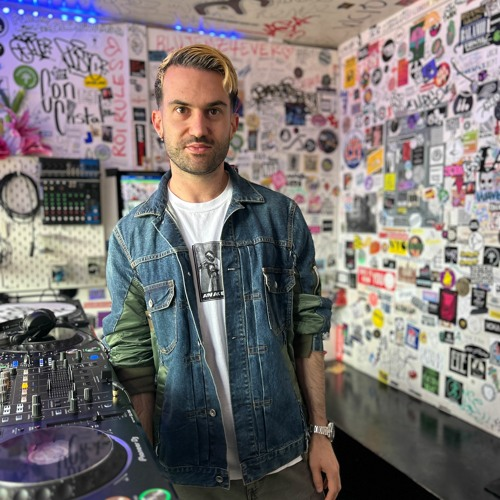
The Turntablist Visionary Who Bridged Hip-Hop and Electronic Dance Music
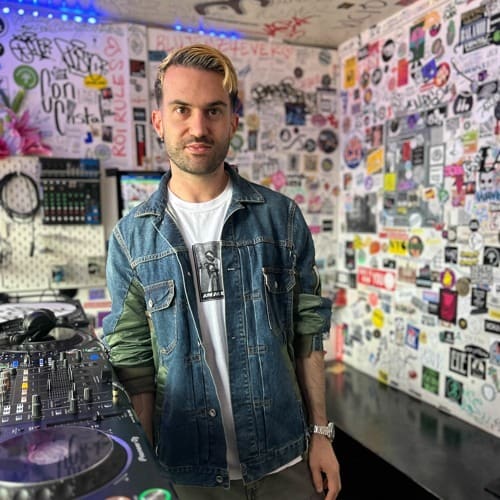
Early Life and Family Background
A-Trak was born Alain Macklovitch on March 30, 1982, in Montreal, Quebec, Canada. Raised in a culturally vibrant Jewish family, he grew up in an intellectually and artistically stimulating environment. His parents, both involved in the arts and academia, encouraged creativity from an early age.
Music was a constant presence in the Macklovitch household. Alain’s older brother, Dave 1 (David Macklovitch), would later achieve fame as one half of the electro-funk duo Chromeo. The brothers’ shared exposure to funk, hip-hop, rock, and electronic music fostered a deep musical literacy that would inform their respective careers.
Alain attended French-language schools in Montreal and later enrolled at McGill University, though his academic path was ultimately eclipsed by his meteoric rise in music.
The Teenage Prodigy: Rise in Turntablism
A-Trak’s relationship with music began with the turntable. At age 13, he discovered DJing and quickly became immersed in hip-hop’s competitive scratch culture. Montreal’s underground scene provided a proving ground, but his ambitions extended far beyond local acclaim.
At just 15 years old, in 1997, A-Trak won the prestigious DMC World DJ Championships, becoming the youngest champion in the competition’s history. The victory established him as an international prodigy. Known for technical precision, creativity, and a playful sense of showmanship—often incorporating theatrical elements into his routines—A-Trak helped elevate DJing from background craft to center-stage artistry.
His early achievements signaled a shift in perception: DJs could be virtuosos.
From Battle Champion to Kanye West’s DJ
A defining chapter of A-Trak’s career began in 2004 when he became the official tour DJ for Kanye West. At the time, West was ascending toward global superstardom, and A-Trak’s role placed him at the intersection of hip-hop innovation and mainstream visibility.
Touring with West exposed him to stadium-scale performance dynamics and the mechanics of global pop production. It also sharpened his understanding of branding, stagecraft, and the power of genre fusion.
Though deeply rooted in hip-hop, A-Trak was simultaneously gravitating toward electronic dance music, house, and electro. This dual identity—battle DJ and dancefloor architect—would define his next evolution.
Founding Fool’s Gold Records: Curator of a Generation
In 2007, A-Trak co-founded Fool’s Gold Records alongside Nick Catchdubs. The label became a cultural force in bridging hip-hop and electronic dance music.
Fool’s Gold championed genre hybridity at a time when electronic and rap communities often operated in parallel rather than in dialogue. Among its most notable signings was Kid Cudi, whose breakout single “Day ’n’ Nite” became a generational anthem.
Through Fool’s Gold, A-Trak nurtured a roster that included producers and artists who blurred boundaries—fostering early works by figures who would later shape global EDM and hip-hop culture. The label became synonymous with forward-thinking club music and streetwise sensibility.
Duck Sauce and the Global Dancefloor
In 2009, A-Trak partnered with producer Armand Van Helden to form the house music duo Duck Sauce.
Their 2010 single “Barbra Streisand” became a worldwide dance phenomenon—an exuberant, sample-driven house track that reached top chart positions across Europe and became a festival staple. The track’s playful irreverence and disco-infused groove reintroduced classic house aesthetics to a new generation raised on electro-house maximalism.
Duck Sauce demonstrated A-Trak’s versatility: he was not merely a technician or label executive, but a hit-making producer capable of commanding global airwaves.
Solo Production Career and Artistic Evolution
As a solo producer, A-Trak has consistently explored the intersections of hip-hop, electro, trap, and house. His releases include:
Selected Albums & Projects
- Dirty South Dance (2012)
- Push (2017)
- The Brothers Macklovitch (2020, with Dave 1)
Notable Singles & Collaborations
- “Heads Will Roll (A-Trak Remix)”
- “Ray Ban Vision” (feat. CyHi The Prynce)
- “We All Fall Down” (feat. Jamie Lidell)
- “Lose My Mind” (with Quavo & Lil Yachty)
His remix of “Heads Will Roll” became an underground club classic, illustrating his gift for transforming indie rock into peak-time dancefloor energy.
In 2012, he founded the DJ collective The Goldie Awards, a competition designed to spotlight emerging DJs and producers, further reinforcing his commitment to nurturing new talent.
Musical Influences and Style
A-Trak’s sonic vocabulary draws from:
- Golden-era hip-hop turntablism
- Chicago and New York house music
- 1980s electro-funk
- French touch and disco
Artists such as Grandmaster Flash, Daft Punk, and Chicago house pioneers shaped his hybrid aesthetic.
Unlike many EDM producers who prioritize drops and spectacle, A-Trak maintains a DJ’s instinct for groove continuity. His productions often foreground rhythm, texture, and cultural references, weaving nostalgia with modern club sonics.
Awards and Recognition
| Year | Award | Organization |
|---|---|---|
| 1997 | World Champion | DMC World DJ Championships |
| Multiple Years | DJ Awards Nominations | International Dance Music Awards |
| 2010 | Global Chart Success (“Barbra Streisand”) | European Music Charts |
Beyond trophies, his influence is visible in the countless DJs who cite him as a bridge between battle culture and festival EDM.
Challenges and Controversies
Navigating authenticity has been a recurring theme in A-Trak’s career. As electronic music surged into mainstream popularity in the 2010s, debates about commercialization intensified. Some critics questioned whether EDM’s festival explosion diluted underground values.
A-Trak, having roots in hip-hop’s competitive authenticity culture, often addressed these tensions publicly—advocating for artistic integrity and cultural respect. His position as both insider and innovator required careful balance.
Additionally, transitioning from Kanye West’s DJ to independent tastemaker required redefining his identity outside the shadow of a superstar collaborator—a challenge he met through entrepreneurship and reinvention.
Public Personal Life and Cultural Identity
A-Trak has spoken about growing up in a bilingual, multicultural Montreal environment, which shaped his open-minded musical outlook. His Jewish heritage and intellectual upbringing fostered curiosity and global awareness.
He married fashion stylist Lyndsey Rodrigues in 2014; although the marriage later ended, his personal relationships have occasionally intersected with his public persona, particularly within fashion and nightlife circles.
He remains closely connected to his brother Dave 1, with whom he collaborated on The Brothers Macklovitch, a project celebrating disco and funk influences rooted in their shared childhood.
Recent Activities (2020–Present)
In the early 2020s, A-Trak continued touring globally while expanding his production collaborations. His work increasingly embraces classic house revivalism and refined club grooves.
He remains active as:
- A festival and club headliner
- A mentor through DJ competitions
- A collaborator across hip-hop and dance music
- A cultural commentator on DJ craft and authenticity
As EDM culture diversifies into melodic house, techno, bass, and hybrid forms, A-Trak’s foundational influence continues to echo across genres.
Legacy and Cultural Impact
A-Trak’s legacy can be distilled into three transformative contributions:
- Elevating DJing to Virtuosity: His DMC victory redefined youth achievement in turntablism.
- Bridging Hip-Hop and EDM: Through Fool’s Gold, he fostered cross-genre collaboration before it became industry norm.
- Championing Artistic Integrity: He consistently advocates for respect toward DJ craft and cultural roots.
For newcomers to electronic dance music, A-Trak represents a lineage that predates festival pyrotechnics and streaming algorithms. His story reveals how DJ culture evolved from underground battles to global stages—without losing its core creative spirit.
In the ever-shifting landscape of dance music, A-Trak remains not just a participant, but an architect—proof that technical mastery, entrepreneurial vision, and cultural sensitivity can coexist in a single, enduring career.