

The Godfather of House: Architect of a Global Sound
Early Life and Formative Years
Frankie Knuckles was born Francis Warren Nicholls Jr. on January 18, 1955, in New York City, United States. Raised in the borough of The Bronx, he grew up in a working-class African-American household at a time when soul, funk, gospel, and early disco were shaping urban American soundscapes.
From a young age, Knuckles was captivated by music and performance. He attended the Fiorello H. LaGuardia High School of Music & Art and Performing Arts, where he studied costume design.
Though not formally trained as a musician, his immersion in theater and design cultivated a deep sensitivity to mood, atmosphere, and presentation—qualities that would later define his DJ sets.
In his teenage years, Knuckles gravitated toward the vibrant underground club scene of 1970s New York. There, he forged a pivotal friendship with fellow DJ Larry Levan, a bond that would help reshape dance music history. Both young men absorbed the sonic innovations of early disco while witnessing firsthand how DJs could transform nightlife into communal, almost spiritual experiences.
The New York Club Scene and Musical Awakening
In the early 1970s, Knuckles began working at clubs such as the legendary The Loft, hosted by David Mancuso. The Loft’s emphasis on high-fidelity sound, emotional musical journeys, and inclusive dance floors profoundly influenced Knuckles’ philosophy.
He developed a reputation for blending records seamlessly, extending grooves, and carefully constructing emotional arcs throughout the night. Disco at this time was more than entertainment—it was a lifeline for marginalized communities, particularly Black, Latino, and LGBTQ+ patrons. Knuckles internalized this ethos of inclusion, which would remain central to his work.
Chicago and the Birth of House Music
In 1977, Knuckles relocated to Chicago, accepting a residency at a new club called The Warehouse. This move would change music history.
At The Warehouse, Knuckles began experimenting more boldly. As disco waned in mainstream popularity following the backlash of the late 1970s, he extended drum breaks using reel-to-reel tape edits, layered European electronic records with American soul vocals, and used drum machines to reinforce rhythmic intensity. The sound that emerged was stripped-down, percussive, and deeply soulful.
Patrons began referring to the music played at The Warehouse as “house music”—a shortened form of “Warehouse music.” Thus, an entirely new genre was born.
When The Warehouse closed, Knuckles moved to another influential venue, the Power Plant, further refining the evolving house sound. His DJ sets became legendary for their emotional depth, spiritual resonance, and technical innovation.
Transition from DJ to Producer
While Knuckles had already shaped house music as a DJ, the mid-1980s saw him emerge as a recording artist and producer. One of his earliest studio successes came through collaboration with vocalist Jamie Principle on the seminal track “Your Love.” Though initially circulated as a club record, it became one of the foundational anthems of house music.
In 1989, Knuckles released his debut album, Beyond the Mix, which helped introduce house music to broader audiences. He followed this with the critically acclaimed Tales from the Club, featuring the Grammy-winning track Keep On Movin’ featuring Lisa Michaelis.
His production style was characterized by lush orchestration, gospel-influenced vocals, warm basslines, and meticulous layering. He preserved disco’s emotional grandeur while embracing electronic minimalism.
Collaborations and Production Work
Knuckles’ impact extended beyond his own recordings. As a remixer and producer, he worked with an impressive array of artists across genres. His remix credits include icons such as:
- Michael Jackson
- Diana Ross
- Whitney Houston
- Chaka Khan
- Depeche Mode
Through these collaborations, he bridged underground club culture and mainstream pop. His remixes often elevated tracks into dancefloor anthems, introducing house music’s rhythmic vocabulary to global audiences.
Awards and Recognition
Frankie Knuckles’ influence was formally acknowledged during his lifetime.
In 1997, he won the Grammy Award for Remixer of the Year (Non-Classical), a landmark recognition for a DJ rooted in underground dance culture.
In 2005, the city of Chicago honored him by renaming a street “Frankie Knuckles Way,” cementing his role in the city’s cultural identity.
Selected Awards and Honors
| Year | Award | Category |
|---|---|---|
| 1997 | Grammy Awards | Remixer of the Year (Non-Classical) |
| 2004 | Dance Music Hall of Fame | Inductee |
| 2005 | City of Chicago | Frankie Knuckles Way (Street Naming Honor) |
Personal Life and Challenges
Knuckles was openly gay at a time when doing so carried significant risk, particularly within Black communities. His openness made him an important figure within LGBTQ+ culture. The dance floor under his guidance became a sanctuary of acceptance.
In 2000, he was diagnosed with Type II diabetes, a condition that later led to complications. In 2008, he had a foot amputated due to diabetes-related issues. Despite these health challenges, he continued touring and producing, demonstrating remarkable resilience.
Frankie Knuckles passed away on March 31, 2014, in Chicago at the age of 59 due to complications related to diabetes.
Musical Philosophy and Artistic Vision
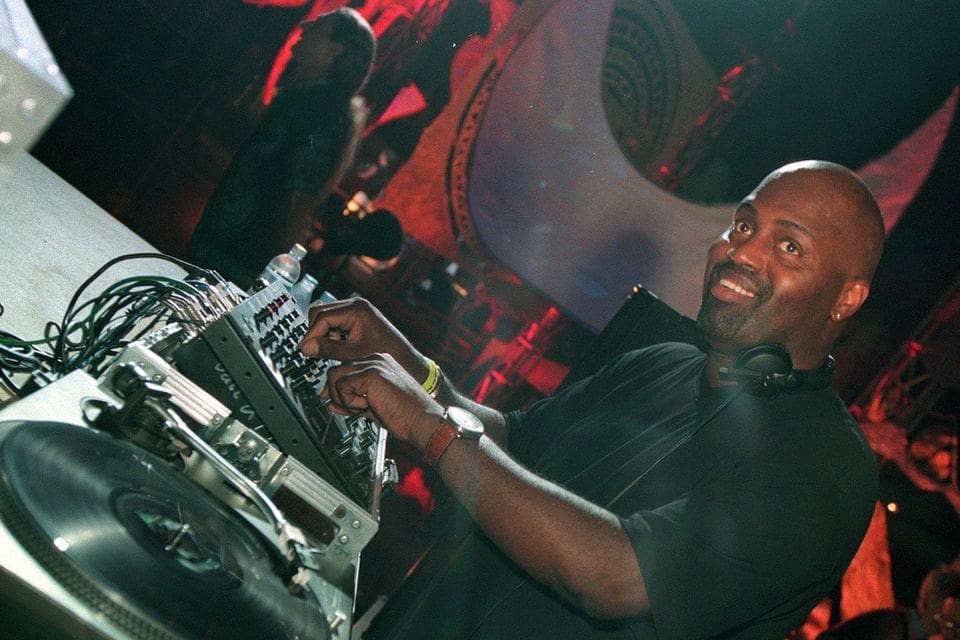
Knuckles frequently described DJing as storytelling. He believed a DJ’s responsibility was to guide dancers through emotional highs and lows. His sets were spiritual journeys, blending gospel fervor with mechanical precision.
He once articulated that music should uplift and unite people—an ethos that remains foundational in house culture worldwide.
Enduring Legacy
Frankie Knuckles is universally regarded as the “Godfather of House.” What began in a Chicago club now resonates globally—from Ibiza superclubs to Lagos dance floors, from Berlin warehouses to Johannesburg festivals.
House music evolved into numerous subgenres—deep house, techno, garage, Afro-house—but its DNA can be traced directly to Knuckles’ innovations. Modern electronic dance music festivals, DJ culture, remix culture, and the global club economy all owe a debt to his pioneering work.
After his passing, tributes poured in from artists across the spectrum. Chicago declared August 25, 2014, as “Frankie Knuckles Day.” His influence continues through archival releases, reissues, documentaries, and the ongoing vitality of house music scenes worldwide.
Selected Discography
Studio Albums
- Beyond the Mix (1989)
- Tales from the Club (1995)
Notable Singles
- “Your Love” (with Jamie Principle)
- “Baby Wants to Ride”
- “The Whistle Song”
- “Keep On Movin’”
Impact on Global Electronic Music
Frankie Knuckles did not merely create a genre—he cultivated a culture. He demonstrated that electronic music could carry soul, politics, spirituality, and communal power. His approach humanized machines and mechanized emotion, forging a sound that was both deeply personal and universally resonant.
Today, every house DJ dropping a four-on-the-floor beat participates—knowingly or not—in a lineage that traces back to a young man from the Bronx who believed the dance floor could change lives.


