

A Relentless Architect of Spanish Techno
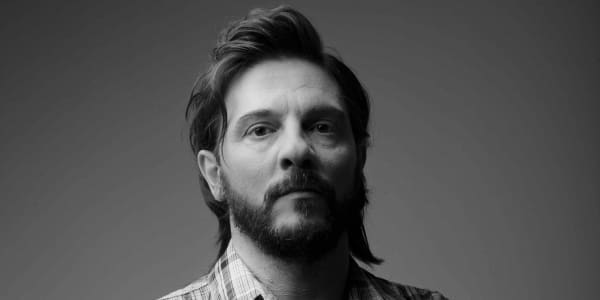
Early Life and Formative Years
Born Óscar Mulero Moya on October 27, 1971, in Madrid, Spain, Oscar Mulero emerged from a generation shaped by cultural transition. Spain in the 1970s was still under the final years of dictatorship, and the country’s youth culture would soon explode into creative freedom during the post-Franco era known as La Movida Madrileña.
Though Mulero was slightly younger than the central protagonists of that movement, its rebellious spirit profoundly influenced the environment in which he grew up.
Raised in Madrid in a middle-class family, Mulero has often described himself as an introspective child drawn to music’s emotional intensity. His early listening habits were eclectic: post-punk, new wave, and early electronic body music formed the bedrock of his sensibility. Bands such as Depeche Mode and industrial pioneers left an indelible mark on him, instilling an appreciation for mood, tension, and sonic austerity.
Although he pursued formal education in Madrid, Mulero’s true schooling occurred in record shops and underground clubs. He became immersed in vinyl culture at a young age, developing both a collector’s discipline and a DJ’s instinct for narrative flow.
The Birth of a DJ: Madrid’s Underground Awakening
Mulero began DJing professionally in the late 1980s, during a formative period for Spain’s electronic scene. His residency at the legendary Madrid club New World became pivotal. It was here that he honed a style defined by hypnotic progression, industrial textures, and emotional depth.
In the early 1990s, Spain witnessed the rise of a uniquely intense clubbing culture. Mulero quickly distinguished himself from mainstream dance DJs by embracing darker, harder-edged sounds influenced by Belgian and German techno. Artists like Surgeon and the burgeoning Birmingham techno scene resonated deeply with him.
However, the mid-1990s brought challenges. As Spanish authorities cracked down on nightlife venues amid concerns about drug culture, several clubs—including key spaces that nurtured underground techno—were shut down. Mulero endured this period of instability, refusing to dilute his artistic identity despite reduced opportunities.
Production Career and the Formation of Warm Up
While Mulero first earned acclaim as a DJ, he gradually transitioned into production. In 2000, he co-founded the influential label Warm Up Recordings, which became a cornerstone of Spain’s underground techno infrastructure. Warm Up was not merely a label; it was a platform for uncompromising artistic vision.
Through Warm Up and subsequent imprints such as PoleGroup (which he later co-founded), Mulero helped cultivate a distinctly Spanish strain of deep, hypnotic techno. His productions were marked by precision: layered percussion, evolving atmospheres, and an almost architectural sense of space.
Albums such as Black Propaganda (2011), Muscle and Mind (2012), and Perfect Peace (2016) solidified his reputation internationally. These works showcased his ability to merge physical intensity with introspective ambience—a balance rarely achieved with such consistency.
Musical Philosophy and Influences
Mulero’s sound is rooted in tension and immersion rather than spectacle. Unlike mainstream EDM artists who build toward explosive drops, he constructs long-form sonic journeys. His sets often unfold gradually, creating a meditative yet relentless momentum.
Influenced by industrial music, post-punk aesthetics, and minimal techno pioneers, Mulero treats rhythm as both a physical and psychological force. He has spoken in interviews about the importance of discipline in DJing—about respecting the dance floor as a shared emotional space rather than a platform for ego.
His artistic kinship with figures like Jeff Mills and Robert Hood lies not in imitation but in shared philosophy: techno as futurist ritual.
Global Recognition and Key Performances
By the late 2000s and 2010s, Mulero had become an international fixture. He performed at major festivals and revered institutions such as Berghain in Berlin, where his deep, driving style found an appreciative audience.
His performances are often described as immersive and cerebral. He eschews theatrics, allowing the music’s architecture to command attention. In an era when EDM increasingly embraced celebrity culture, Mulero remained steadfastly focused on craft.
Discography Overview
Selected Studio Albums
| Year | Title |
|---|---|
| 2011 | Black Propaganda |
| 2012 | Muscle and Mind |
| 2013 | Grey Fades to Green |
| 2016 | Perfect Peace |
| 2019 | The Beauty of Leaving a Legacy |
Notable EPs and Projects
- CV Is Dead
- Anaconda
- Numerous releases on Warm Up, PoleGroup, and Token Records
Awards and Recognition
While underground techno rarely aligns with mainstream award circuits, Mulero’s accolades are reflected in peer respect and critical acclaim.
| Year | Recognition | Organization |
|---|---|---|
| 2010s | Lifetime Contribution to Spanish Techno | Spanish Electronic Press |
| Multiple Years | Top DJ Rankings | Resident Advisor Polls |
| 2020 | International Techno Ambassador | European Club Circuit |
His enduring bookings at elite venues and festivals serve as testament to his stature.
Challenges and Controversies
Mulero’s career unfolded against the backdrop of Spain’s fluctuating club culture policies. The closure of venues in the 1990s and early 2000s posed existential threats to underground artists. Yet rather than capitulate to commercial trends, Mulero doubled down on artistic integrity.
He has also navigated the broader commercialization of EDM with visible skepticism. While never overtly polemical, his work implicitly critiques spectacle-driven dance music by offering depth, subtlety, and discipline.
Personal Life and Cultural Identity
Oscar Mulero maintains a relatively private personal life. Based primarily in Madrid, he has consistently emphasized community over celebrity. His identity is deeply intertwined with Spain’s cultural evolution—from post-dictatorship liberation to modern European integration.
There is a philosophical austerity to his persona. Interviews suggest a disciplined individual who views techno as both craft and calling. His music’s introspective quality reflects this temperament: it is less about escapism and more about collective immersion.
Production and Mentorship
Beyond his own releases, Mulero has mentored and collaborated with emerging Spanish techno producers, helping position Spain as a respected force within global underground circuits. Through Warm Up and PoleGroup, he provided platforms for artists who might otherwise have remained regional talents.
His remix work has extended his influence internationally, reshaping tracks with his signature depth and tension.
Recent Activities (2020s–2026)
In the 2020s, Mulero continued touring globally, adapting to the pandemic-era pause with renewed creative focus in the studio. Subsequent releases have maintained his uncompromising aesthetic while subtly expanding his textural palette.
As of 2026, he remains a central figure in European techno—proof that longevity in electronic music depends not on trends but on conviction.
Oscar Mulero’s legacy lies in preservation and evolution. He did not merely participate in Spain’s techno movement; he helped build its infrastructure. For newcomers to EDM, his career offers an alternative narrative: electronic dance music can be cerebral, disciplined, and profoundly immersive.


