

The Sonic Alchemist of Contemporary Techno
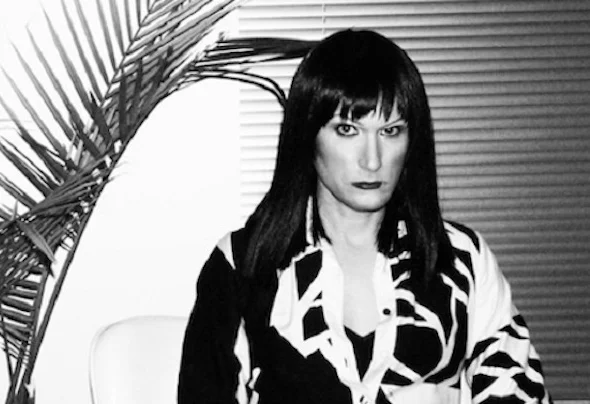
Early Life and Background
Full Birth Name: Seth Horvitz
Stage Name: Rrose
Born: 1979
Birthplace: United States
Seth Horvitz was born in the United States in 1979, growing up in a cultural environment that encouraged artistic exploration and intellectual curiosity.
While detailed information about his parents and early family life remains largely private, Horvitz has spoken in interviews about developing an early fascination with sound, music technology, and avant-garde art.
His formative years coincided with the rapid technological expansion of electronic music production during the 1990s. The accessibility of synthesizers, drum machines, and computer-based music tools opened new creative possibilities for young musicians interested in experimental sound.
Horvitz became deeply engaged with music at an early age, exploring not only club-oriented electronic genres but also experimental composition and sound design.
Education and Artistic Formation
Seth Horvitz pursued formal education in music, eventually studying electronic music composition and sound art at the university level. His academic training exposed him to a broad spectrum of musical traditions, including:
- electroacoustic composition
- minimalism
- experimental and avant-garde music
- digital sound manipulation
- installation-based sound art
These studies profoundly shaped his artistic philosophy. Unlike many techno artists whose backgrounds emerge primarily from DJ culture, Horvitz developed a composer’s approach to electronic sound, emphasizing texture, spatial perception, and sonic transformation.
He became particularly interested in the ways sound could alter psychological perception and emotional experience—an idea that would later define the hypnotic character of Rrose productions.
Origins of the Rrose Persona
Before adopting the Rrose alias, Horvitz released experimental music under his own name and other pseudonyms, most notably Sutekh. Under this earlier moniker, he explored glitch electronics, ambient textures, and experimental techno.
The name Rrose carries layered conceptual meaning. It references Rrose Sélavy, the famous alter ego created by the Dada artist Marcel Duchamp. Duchamp used the pseudonym to explore themes of identity, transformation, and artistic ambiguity.
By adopting this reference, Horvitz positioned the Rrose project as more than a musical alias—it became a conceptual framework exploring identity and perception.
The name itself is intentionally ambiguous, challenging listeners to question assumptions about gender, authorship, and artistic identity.
Emergence in the Global Techno Scene
The Rrose project began gaining international recognition in the early 2010s, particularly after a series of releases on the influential techno label Sandwell District.
The Sandwell District collective, known for its dark, atmospheric approach to techno, provided the ideal platform for Rrose’s evolving sonic vision. Releases such as “Waterfall” and “Merchant of Salt” introduced audiences to a sound characterized by hypnotic loops, subtle modulation, and slowly evolving rhythmic structures.
These early records quickly became staples in underground techno circles, frequently played by leading DJs across Europe’s most respected clubs.
Unlike many producers focused on high-energy dance tracks, Rrose’s music emphasized deep listening and gradual sonic transformation, drawing listeners into extended states of rhythmic meditation.
Musical Style and Artistic Philosophy
Rrose’s sound is often described as hypnotic techno, though the term only partially captures its complexity.
The project’s productions are built upon several defining characteristics:
1. Minimalist Sonic Architecture
Tracks often develop slowly, layering subtle variations over extended durations.
2. Deep Psychoacoustic Exploration
Rrose frequently experiments with phase relationships, spatial effects, and rhythmic repetition to alter listeners’ perception of time and sound.
3. Experimental Sound Design
Unconventional sound sources, modular synthesizers, and granular processing techniques contribute to the project’s distinctive sonic palette.
4. Philosophical and Conceptual Influences
Themes of identity, transformation, and perception underpin many Rrose works.
In interviews, Horvitz has emphasized that his goal is not simply to create dance music, but to craft sonic environments that reshape how listeners experience sound itself.
Studio Albums and Major Releases
Rrose’s discography includes a range of EPs, albums, and collaborative works that have shaped contemporary experimental techno.
Debut Album: Having Never Written a Note for Percussion (2015)
This landmark album reinterpreted a minimalist composition by avant-garde composer James Tenney, transforming it into a hypnotic electronic sound piece.
Rather than producing traditional techno tracks, the album presented a continuous sonic arc, gradually rising and falling in intensity over nearly an hour.
The project demonstrated Rrose’s commitment to bridging experimental music and electronic club culture.
Further Explorations
Subsequent releases expanded this experimental approach, incorporating modular synthesis and complex rhythmic structures.
Notable works include:
- Hymn to Moisture (2014)
- Waterfall (2012)
- Merchant of Salt (2011)
- The Ends of Weather (2013)
These recordings became influential within the hypnotic techno movement.
Collaborations and Production Work
Throughout his career, Rrose has collaborated with numerous artists and experimental musicians.
Key collaborations include:
- Lucy – experimental techno projects
- Robert Aiki Aubrey Lowe – interdisciplinary sound works
- Bob Ostertag – avant-garde composition
- Various members of the experimental techno community
Rrose’s music has appeared on respected labels such as:
- Sandwell District
- Eaux
- Stroboscopic Artefacts
- Semantica
- Infrastructure New York
These collaborations helped expand the intersection between techno, contemporary composition, and sound art.
Discography Overview
Studio Albums
| Year | Album | Notes |
|---|---|---|
| 2015 | Having Never Written a Note for Percussion | Minimalist reinterpretation |
| 2023 | Please Touch | Experimental techno exploration |
Selected EPs
| Year | Release |
|---|---|
| 2011 | Merchant of Salt |
| 2012 | Waterfall |
| 2013 | The Ends of Weather |
| 2014 | Hymn to Moisture |
| 2017 | Enfold |
| 2019 | Rrose vs Polygonia |
Performances and Live Sound Installations
Unlike many techno artists who focus primarily on DJ sets, Rrose frequently performs live modular synthesizer performances.
These concerts emphasize improvisation and sound design rather than track mixing.
His performances have appeared in diverse venues, including:
- international techno festivals
- experimental music festivals
- contemporary art institutions
- academic music conferences
Through these performances, Rrose has become an important bridge between club culture and experimental art music.
Personal Identity and Public Image
One of the most intriguing aspects of the Rrose project is its relationship with identity.
By referencing Duchamp’s Rrose Sélavy persona, Seth Horvitz intentionally created an artist identity that resists clear categorization.
The name Rrose is gender-ambiguous, encouraging audiences to reconsider assumptions about authorship and identity in electronic music.
Horvitz has discussed this concept in interviews, explaining that the project explores fluidity and transformation rather than fixed artistic identity.
This conceptual framework aligns with broader themes in contemporary art regarding gender, perception, and the role of the artist.
Challenges and Artistic Independence
Rrose’s career path has been markedly different from mainstream EDM artists.
Rather than pursuing commercial festival circuits or radio-friendly productions, Horvitz chose to remain deeply rooted in the experimental underground.
This decision presented certain challenges:
- limited mainstream exposure
- smaller commercial opportunities
- the need to balance artistic experimentation with audience accessibility
However, this independence also allowed Rrose to maintain a high level of creative freedom, resulting in some of the most intellectually ambitious works in modern techno.
Awards and Recognition
While experimental techno rarely receives mainstream award recognition, Rrose has achieved widespread critical acclaim.
| Year | Recognition | Organization |
|---|---|---|
| 2011 | Breakthrough techno release Merchant of Salt | Underground techno press |
| 2015 | Acclaimed reinterpretation of Tenney composition | Experimental music critics |
| 2020s | Recognition as a pioneer of hypnotic techno | Global electronic music community |
Within underground electronic circles, Rrose is widely regarded as one of the genre’s most innovative producers.
Recent Work and Activities
In recent years, Rrose has continued expanding the project’s artistic scope.
Recent activities include:
- release of the album Please Touch
- collaborative experimental works with other techno producers
- international performances featuring modular synthesizer systems
- participation in interdisciplinary art and music festivals
These projects demonstrate an ongoing commitment to pushing the boundaries of electronic sound.
Legacy and Cultural Impact
Rrose’s influence extends far beyond individual recordings.
The project has helped shape the evolution of hypnotic techno, a subgenre characterized by deep repetition, subtle modulation, and immersive atmospheres.
Key elements of Rrose’s legacy include:
Redefining Techno’s Artistic Potential
By integrating avant-garde composition techniques, Rrose expanded the expressive possibilities of techno.
Bridging Club Culture and Experimental Music
The project connects underground dance floors with contemporary art institutions.
Challenging Artistic Identity
The Rrose persona encourages reflection on gender, authorship, and creative identity.
Influencing New Generations
Many younger techno producers cite Rrose as an inspiration for their approach to sound design and minimalism.
In the ever-expanding universe of electronic music, Rrose stands as a singular figure—an artist who approaches techno not merely as dance music, but as a philosophical and sonic exploration of perception itself.


