

The Organic Architect of Downtempo Electronica
Early Life and Family Background
Birth, Childhood, and Formative Influences
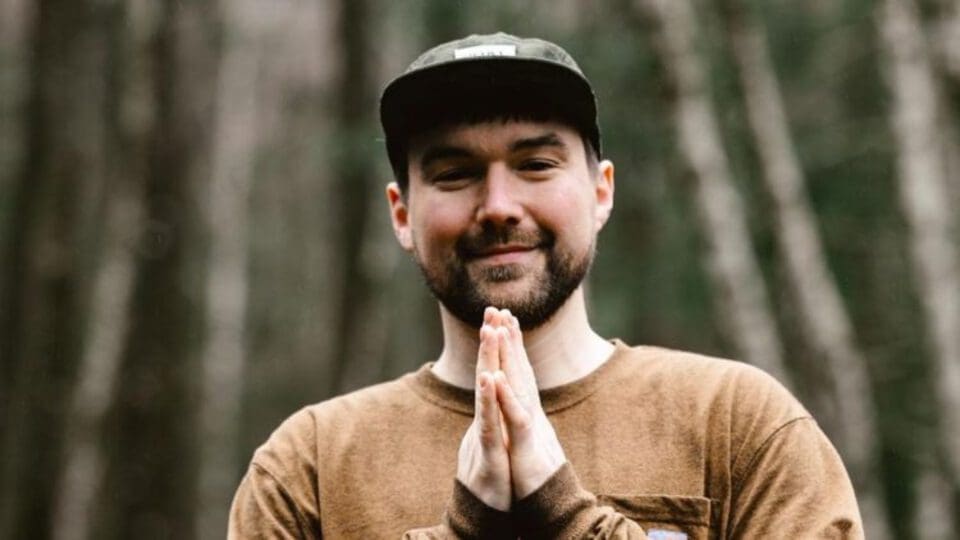
Douglas Appling was born on May 27, 1987, in Virginia, United States. He spent much of his upbringing in Fredericksburg, Virginia, an environment far removed from the global club capitals usually associated with electronic music culture.
Yet it was precisely this quieter upbringing that helped shape the deeply reflective qualities embedded in his music.
Appling grew up in a household immersed in diverse artistic and musical influences. His father maintained an eclectic record collection that reportedly included artists ranging from progressive rock and folk music to pioneering electronic acts such as Kraftwerk and Orbital. Meanwhile, his mother’s experiences in the Peace Corps exposed the family to African instruments, rhythms, and musical traditions from outside the Western canon. Kalimbas, folk instruments, handmade dulcimers, and unconventional percussion instruments were part of his childhood environment.
This multicultural sonic upbringing profoundly shaped his worldview. Long before “world fusion” became fashionable within electronic music, Appling had internalized the idea that music could transcend geographic boundaries.
He began studying violin at approximately four years old and continued formal classical training through childhood. By adolescence, his interests expanded into drums, bass guitar, and electric guitar. He later participated in local rock bands during high school, developing a deeper understanding of arrangement, live performance, and collaborative musicianship.
Unlike many electronic producers who entered music through DJ culture alone, Appling’s foundation was heavily rooted in instrumental musicianship and composition. This distinction would become central to his artistic identity.
Education and Intellectual Development
After high school, Appling attended the College of William & Mary in Williamsburg, Virginia, where he studied psychology. Although his formal degree was not in music, his university years proved crucial to his artistic evolution.
He simultaneously pursued coursework in music theory while experimenting with early digital production software such as Acid Pro and Reason. During this era, the internet was rapidly democratizing music distribution, allowing independent producers to build audiences outside traditional industry systems.
Appling became fascinated with sampling, looping, and texture-based composition. He began blending hip-hop-inspired beats with ambient melodies, orchestral instrumentation, and downtempo rhythms. These experiments laid the groundwork for what would become the Emancipator sound.
His psychology studies also subtly informed his artistic philosophy. Many listeners and critics have observed that Emancipator’s music often evokes emotional introspection, mindfulness, memory, and altered states of consciousness—qualities perhaps influenced by his academic understanding of human cognition and emotion.
The Birth of Emancipator
“Soon It Will Be Cold Enough” and DIY Beginnings
In 2006, while still a college student, Appling self-released his debut album, Soon It Will Be Cold Enough. At the time, there was little indication that the independently produced project would eventually become one of downtempo electronica’s defining cult classics.
The album was created largely from his bedroom studio setup. Appling personally burned CDs, packaged orders, and mailed copies himself through online sales platforms such as MySpace. This grassroots distribution model reflected the fiercely independent ethos that would characterize much of his career.
Musically, the album introduced listeners to a highly cinematic blend of:
- Trip-hop beats
- Atmospheric electronica
- Folk instrumentation
- Classical string arrangements
- Hip-hop rhythms
- Ambient textures
- Organic field recordings
Tracks such as “First Snow,” “Eve,” and “When I Go” developed devoted followings online, particularly among listeners seeking emotionally immersive electronic music beyond mainstream dance culture.
The album’s title itself suggested a mood rather than a spectacle—a meditative experience rooted in seasonal melancholy and emotional introspection.
Over time, Soon It Will Be Cold Enough evolved into an underground classic within chillout and downtempo circles. Many fans continue to regard it as one of the defining electronic albums of the 2000s.
Japanese Recognition and International Breakthrough
A major turning point came when the album caught the attention of Hydeout Productions, the influential Japanese label founded by the legendary producer Nujabes.
Nujabes, widely revered for pioneering jazz-infused hip-hop and emotionally rich instrumental music, recognized a spiritual kinship in Appling’s work. Hydeout Productions reissued Soon It Will Be Cold Enough in 2008, dramatically expanding Emancipator’s international reach.
This connection proved immensely significant. At a time when many Western electronic producers pursued aggressive club sounds, Emancipator became associated with a more contemplative lineage of electronic music emphasizing beauty, subtlety, and emotional resonance.
The Japanese audience embraced his work enthusiastically, and tours in Japan further strengthened his global reputation.
Relocation to Portland and Artistic Expansion
Eventually relocating to Portland, Oregon, Appling found an ideal creative environment. Portland’s thriving independent arts culture aligned naturally with his experimental ethos and environmentally conscious aesthetic.
The Pacific Northwest’s forests, coastlines, misty climates, and meditative atmosphere became deeply embedded in the emotional architecture of his music. Nature itself often functions almost like a hidden collaborator in Emancipator compositions.
This period also marked his transition from early software experimentation to more advanced production systems, particularly Ableton Live, which allowed him to refine his layered compositional approach.
Safe in the Steep Cliffs: Refining the Emancipator Sound
Released in 2010, Safe in the Steep Cliffs represented a major artistic maturation.
The album expanded upon the emotional textures of his debut while introducing richer rhythmic complexity and more sophisticated orchestration. It demonstrated that Emancipator was not merely a promising independent producer, but a fully developed sonic auteur.
Critics praised the album’s:
- Organic percussion
- Delicate violin melodies
- Cinematic pacing
- Warm analog textures
- Emotional subtlety
At a time when EDM was becoming increasingly commercialized through massive festival culture, Emancipator’s restrained and introspective approach felt radically different.
Rather than aiming for explosive peaks, his compositions unfolded gradually like emotional landscapes.
The Emancipator Ensemble
Transforming Electronic Music into Live Experience
One of Appling’s most important contributions to electronic music came through the creation of the Emancipator Ensemble in 2013.
Electronic music has historically struggled with questions surrounding live authenticity. Many audiences viewed producers as laptop performers disconnected from traditional musicianship. Appling challenged this perception by assembling a live band capable of translating his studio work into immersive concert experiences.
The Ensemble incorporated:
- Live violin
- Guitar
- Bass
- Drums
- Keyboards
- Electronic sequencing
Longtime collaborator Ilya Goldberg became especially central to the project, adding violin and multi-instrumental textures that enhanced the ensemble’s emotional richness.
The live performances transformed Emancipator from a solitary producer into the architect of a fully realized musical ecosystem.
Dusk to Dawn and Expanding Ambition
Released in 2013, Dusk to Dawn marked another major evolution.
The album balanced cinematic downtempo textures with increasingly sophisticated production techniques. It also demonstrated Appling’s growing confidence as a composer capable of constructing expansive narrative arcs across entire records.
The project coincided with extensive touring and significantly broadened his international audience.
Many critics viewed Dusk to Dawn as one of the defining downtempo releases of the decade.
Founding Loci Records
In 2012, Appling founded Loci Records, an independent label dedicated to atmospheric, melodic, and emotionally driven electronic music.
The label became an influential platform for artists working within:
- Ambient electronica
- Downtempo
- Experimental beat music
- Organic electronic fusion
Loci Records helped cultivate a global community of artists who rejected formulaic EDM structures in favor of emotional nuance and sonic experimentation.
The label also reinforced Appling’s role not merely as a musician, but as a curator and cultural architect within independent electronic music.
Seven Seas and Global Musical Consciousness
Released in 2015, Seven Seas further deepened Emancipator’s engagement with global musical influences.
The album blended:
- Folk instrumentation
- World percussion
- Ambient electronica
- Cinematic sound design
- Live ensemble performance
Thematically, the record explored travel, interconnectedness, memory, and emotional geography. It reflected Appling’s longstanding fascination with cultural hybridity and sonic exploration beyond national boundaries.
The accompanying tours established the Emancipator Ensemble as a respected live act capable of translating delicate studio textures into emotionally powerful concert experiences.
Baralku and Spiritual Themes
The 2017 album Baralku represented one of Emancipator’s most spiritually resonant works.
The title references a spiritual island from Australian Indigenous cosmology associated with the afterlife and ancestral transition. Although Appling approached the concept respectfully and atmospherically rather than didactically, the album reflected his growing interest in transcendence, mortality, and spiritual interconnectedness.
Tracks such as “Ghost Pong” and “Goodness” displayed remarkable sonic restraint and emotional maturity.
By this stage, Emancipator had fully established himself as one of electronic music’s foremost practitioners of emotionally immersive downtempo composition.
Mountain of Memory and Pandemic-Era Reflection
Released in 2020 during the global COVID-19 pandemic, Mountain of Memory arrived during a period of collective uncertainty and introspection.
The album’s meditative pacing and expansive atmospheres resonated deeply with listeners experiencing isolation, anxiety, and emotional upheaval.
Many fans described the record as healing and grounding during a chaotic historical moment.
Its themes included:
- Reflection
- Impermanence
- Emotional resilience
- Human connection
- Ecological awareness
The album reaffirmed Emancipator’s unique capacity to create music that feels emotionally restorative.
Musical Style and Influences
The Emancipator Sound
Describing Emancipator purely as “EDM” can be misleading for newcomers unfamiliar with the diversity of electronic music.
His work exists at the intersection of:
- Downtempo
- Trip-hop
- Ambient
- Chillout
- Instrumental hip-hop
- Folktronica
- Cinematic electronica
Major influences include:
- DJ Shadow
- Bonobo
- Nujabes
- Kraftwerk
- Orbital
Yet Emancipator’s sound remains uniquely identifiable because of his integration of:
- Live string arrangements
- Organic instrumentation
- Natural ambience
- Subtle hip-hop grooves
- Melancholic melodic structures
His compositions rarely rely on vocals or lyrical storytelling. Instead, they evoke emotional narratives through texture and atmosphere.
Collaborations and Contributions to Other Artists
Through Loci Records and various collaborative projects, Appling has helped elevate numerous artists within the downtempo and ambient electronic community.
Notable collaborators include:
- Tor
- 9 Theory
- Rena Jones
- Flowerpulse
- Lapa
- Ilya Goldberg
He has also contributed remixes and production work that helped bridge underground beat culture with broader electronic audiences.
Importantly, Emancipator helped legitimize downtempo electronica as concert music rather than merely background listening.
Challenges and Industry Position
Unlike many EDM stars associated with celebrity culture, Emancipator has largely avoided tabloid controversies.
However, his career has involved significant artistic challenges:
- Operating independently outside major-label systems
- Sustaining financially viable touring
- Maintaining artistic integrity amid commercial EDM trends
- Translating emotionally subtle music into live performance settings
His refusal to conform to mainstream festival formulas arguably limited his commercial visibility compared to larger EDM acts. Yet this independence also preserved the authenticity that defines his artistic reputation.
Public Persona and Personal Philosophy
Appling has cultivated an unusually private public image.
Interviews frequently reveal a thoughtful and introspective artist deeply connected to nature, mindfulness, and sonic exploration. He often speaks less about fame and more about emotional resonance, travel, and the spiritual dimensions of music.
His aesthetic sensibilities consistently emphasize:
- Environmental immersion
- Organic textures
- Emotional healing
- Cross-cultural appreciation
- Artistic patience
Rather than presenting himself as a celebrity DJ, he functions more as a composer and curator of emotional experiences.
Legacy and Cultural Impact
Redefining Emotional Electronic Music
Emancipator’s legacy lies not in chart dominance, but in emotional influence.
He helped demonstrate that electronic music could be:
- Meditative
- Organic
- spiritually evocative
- deeply human
- compositionally sophisticated
At a time when electronic music often became synonymous with spectacle, he offered introspection.
His impact can be heard throughout modern:
- Chill electronic music
- Lo-fi culture
- Ambient beat scenes
- Cinematic downtempo production
- Organic house and folktronica movements
Many younger producers cite him as an inspiration for blending live instrumentation with electronic composition.
Selected Discography
| Album | Year |
|---|---|
| Soon It Will Be Cold Enough | 2006 |
| Safe in the Steep Cliffs | 2010 |
| Dusk to Dawn | 2013 |
| Seven Seas | 2015 |
| Baralku | 2017 |
| Mountain of Memory | 2020 |
| Dab Records, Vol. 1 | 2021 |
| Xylem | 2021 |
| 11th Orbit | 2022 |
Selected Awards and Recognition
| Recognition | Significance |
|---|---|
| Hydeout Productions Reissue | International breakthrough via Japanese electronic scene |
| Founder of Loci Records | Influential independent electronic label |
| Emancipator Ensemble Tours | Helped redefine live downtempo performance |
| Global Festival Appearances | Expanded downtempo electronica internationally |
| Cult Status of Soon It Will Be Cold Enough | Widely regarded as a landmark downtempo album |
Recent Activities and Continuing Evolution
In recent years, Appling has continued exploring collaborative ambient and downtempo projects while maintaining Loci Records as a hub for emotionally driven electronic music.
His collaborations with artists such as Lapa and Rena Jones demonstrate an ongoing commitment to sonic experimentation and immersive composition.
Even after nearly two decades, Emancipator remains artistically restless—continually refining a musical language built not on spectacle, but on atmosphere, emotional intelligence, and sonic depth.
For listeners unfamiliar with the broader spectrum of electronic music, Emancipator offers an ideal entry point into a world far removed from stereotypical EDM clichés.


