

The Ascetic Visionary of Scandinavian Techno
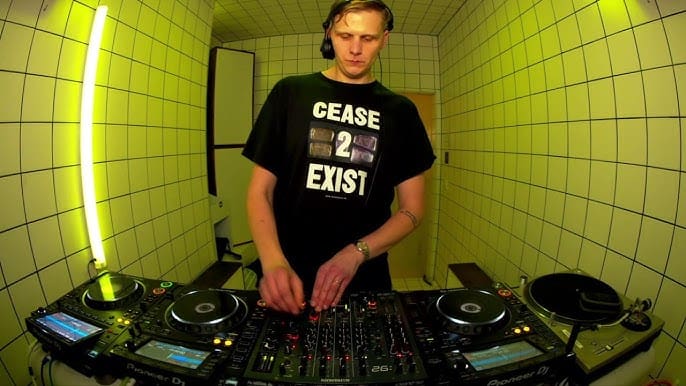
Abdulla Al Rashim was born in Sweden in 1987 to parents of Middle Eastern heritage. Raised within Sweden’s socially progressive yet culturally structured environment, he grew up navigating multiple identities—Nordic minimalism intersecting with Islamic tradition.
Although Rashim has maintained a deeply private stance regarding his family life, interviews suggest a disciplined upbringing shaped by reflection, structure, and spiritual awareness.
Sweden’s rich public arts infrastructure provided a fertile backdrop for creative experimentation, yet it was not mainstream pop or radio music that first captivated him. Instead, he was drawn toward mood, tone, and sonic architecture.
His adolescence coincided with the growth of Scandinavian techno and industrial-leaning electronic movements. This cultural moment would profoundly influence his aesthetic path.
Education and Intellectual Formation
Details of Rashim’s formal education remain largely undisclosed—consistent with his reserved public persona. However, his work reveals an unmistakable intellectual depth. His music often references metaphysical concepts, theological symbolism, and psychological introspection.
Unlike many producers who enter the scene through DJ culture alone, Rashim approached electronic music as an existential inquiry. He has spoken in interviews about sound as a means of internal alignment—a practice closer to meditation than entertainment.
This philosophical foundation distinguishes him from more commercially oriented EDM artists and situates him within techno’s most contemplative lineage.
Emergence: The Formation of a Hypnotic Language
Abdulla Rashim emerged in the early 2010s as a defining voice in Sweden’s underground techno scene. His early releases quickly gained attention for their restraint and immersive intensity.
A pivotal milestone in his career was the co-founding of Northern Electronics, a Stockholm-based label that would become synonymous with a new wave of Scandinavian minimal techno. The label’s visual and sonic identity—monochromatic, austere, emotionally resonant—mirrored Rashim’s personal aesthetic.
Through Northern Electronics, Rashim was not merely releasing music; he was cultivating a movement.
Key Releases and Artistic Development
Though his discography is selective rather than prolific, each release carries conceptual weight.
Selected Discography
| Year | Title | Format | Label |
|---|---|---|---|
| 2013 | Unanimity | Album | Northern Electronics |
| 2014 | Asayita 1 | EP | Northern Electronics |
| 2015 | Asayita 2 | EP | Northern Electronics |
| 2018 | Of Water and the Spirit | Album | Northern Electronics |
| 2020s | Various EPs & Remixes | EP/Single | Northern Electronics |
Unanimity (2013)
His debut album introduced audiences to his sonic signature: cavernous reverberation, measured percussion, and a hypnotic pulse that unfolds slowly, almost ceremonially.
Asayita Series (2014–2015)
These EPs deepened his exploration of repetition and spiritual atmosphere. The minimalism was not empty—it was deliberate, drawing listeners inward rather than outward.
Of Water and the Spirit (2018)
This album expanded his thematic palette. The title itself evokes spiritual purification and transformation, aligning with recurring motifs in his work—cleansing, introspection, transcendence.
Musical Influences and Sonic Architecture
Rashim’s influences are broad yet cohesive:
- Detroit techno pioneers and the genre’s original futurist ethos
- European industrial and dark ambient traditions
- Minimalist compositional structures
- Islamic spiritual philosophy
His productions are characterized by:
- Deep, resonant bass structures
- Gradual progression rather than sudden drops
- A deliberate absence of commercial hooks
- Emotional tension sustained through subtle modulation
For listeners unfamiliar with underground techno, his music may initially appear austere. Yet within its repetition lies nuance—a slow-burning emotional arc that rewards patient listening.
Northern Electronics: A Cultural Platform
Northern Electronics is not simply a label but a curatorial vision. Through it, Rashim supported like-minded producers and established a distinctly Scandinavian techno identity.
The label’s artists collectively emphasized:
- Emotional depth over dancefloor euphoria
- Texture over melody
- Spiritual undertones within secular club environments
By shaping this ecosystem, Rashim extended his influence beyond his own releases. He became an architect of aesthetic coherence.
Production, Collaboration, and Mentorship
Beyond his solo work, Rashim has contributed through:
- Collaborative EPs with fellow Swedish producers
- Remix contributions within European techno networks
- Mentorship of emerging Northern Electronics artists
- Curating events that prioritize atmosphere and sonic integrity
His approach to collaboration emphasizes shared philosophy rather than commercial advantage. The result is a body of work defined by consistency rather than trend-chasing.
Controversies and Challenges
Rashim’s career has largely avoided scandal—a rarity in contemporary music culture. However, his deliberate rejection of EDM’s commercial spectacle has presented structural challenges.
During the 2010s, as electronic music became increasingly festival-driven, artists were incentivized to produce high-impact, drop-oriented tracks. Rashim resisted this model. His sound remained immersive, restrained, and uncompromising.
The COVID-19 pandemic further disrupted underground club culture, silencing dance floors worldwide. For an artist whose work thrives in immersive physical spaces, this period represented a significant challenge. Yet it also reinforced the introspective quality of his catalog—music that could resonate equally in solitude.
Public Personal Life and Spiritual Identity
Abdulla Rashim’s Islamic faith subtly informs his worldview and artistic ethos. Themes of purification, reflection, and spiritual discipline recur in his work. He has articulated in interviews that music functions as a channel for self-examination rather than self-promotion.
His privacy is deliberate. In an industry fueled by visibility, Rashim maintains distance from celebrity culture. This restraint strengthens his mystique and aligns with the contemplative nature of his music.
Rather than projecting a lifestyle brand, he presents an artistic philosophy.
Awards and Recognition
While techno’s underground circuit operates largely outside mainstream award institutions, Rashim’s influence has been widely acknowledged within electronic music circles.
| Category | Recognition |
|---|---|
| Scandinavian Techno Innovator | International critical acclaim |
| Label Founder | Co-founder of Northern Electronics |
| Underground Electronic Pioneer | Respected global touring presence |
| Curatorial Influence | Established distinct Swedish techno identity |
His recognition lies primarily in influence rather than trophies—a hallmark of artists who shape genres from within.
Recent Activities (Through 2025)
As of 2025, Abdulla Rashim continues to:
- Perform at respected underground venues and curated festivals across Europe
- Release selective, concept-driven projects via Northern Electronics
- Maintain a disciplined touring schedule aligned with his aesthetic values
- Support emerging Scandinavian artists
His output remains measured—each project treated as a chapter in an evolving philosophical exploration rather than a commercial cycle.
Enduring Legacy and Cultural Impact
Abdulla Rashim’s legacy rests on three pillars:
1. Re-centering Spirituality in Techno
He demonstrated that techno can function as contemplative art, not merely club entertainment.
2. Defining Scandinavian Minimalism
Through Northern Electronics, he helped codify a distinctly Swedish approach to dark, immersive techno.
3. Artistic Integrity Over Commercialism
In resisting mainstream EDM trends, he preserved a lineage rooted in authenticity and depth.
For global readers unfamiliar with electronic subgenres, Rashim embodies techno’s quieter revolution—one that unfolds not in fireworks, but in shadow.


