

The Relentless Pulse of Modern Techno
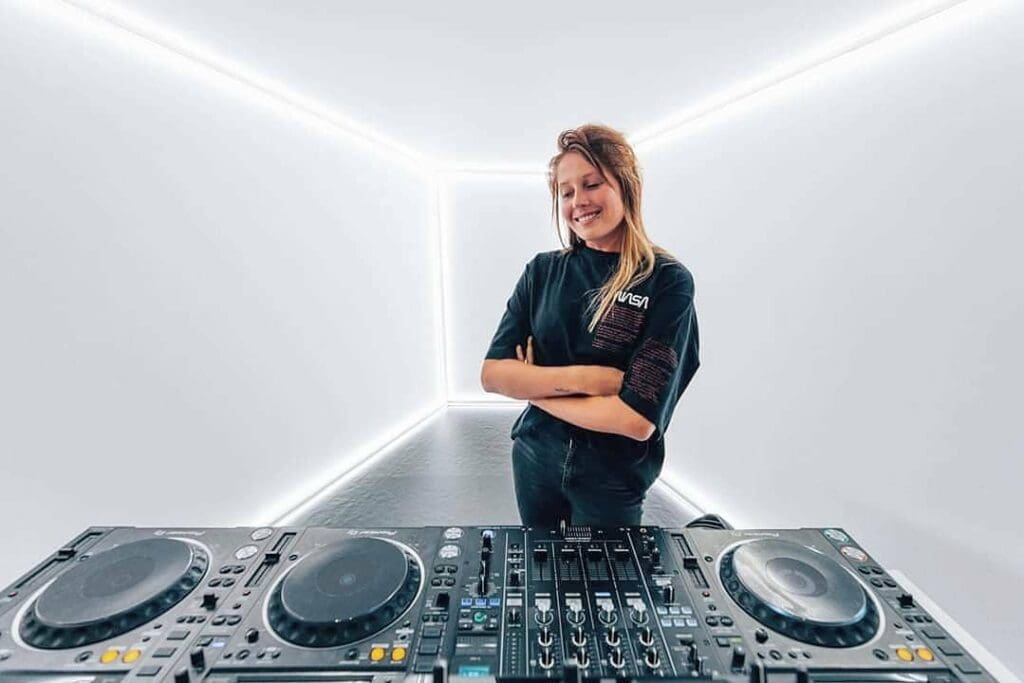
In the vast, ever-evolving universe of electronic dance music, few figures have reshaped the global techno landscape as decisively as Charlotte de Witte. With a sound that is uncompromising, hypnotic, and fiercely minimal, she has become one of the most recognizable faces—and forces—of 21st-century techno.
Born Charlotte Aloysia de Witte on July 21, 1992, in Ghent, Belgium, she rose from the intimate club circuits of her homeland to headline the world’s largest electronic music festivals.
For global readers unfamiliar with EDM, her story is not merely one of commercial success, but of cultural transformation: a young Belgian artist who challenged industry norms, revived harder strains of techno for a new generation, and helped redefine what leadership in electronic music looks like.
Early Life and Formative Years in Ghent
Charlotte Aloysia de Witte grew up in Ghent, a historic Belgian city known for its medieval architecture and progressive arts culture. Raised in a middle-class family, she developed an early curiosity for music that extended beyond mainstream pop. While details about her parents and siblings remain largely private—reflecting her preference to keep family life separate from her public persona—she has often described a supportive upbringing that encouraged creative exploration.
As a teenager, de Witte gravitated toward darker and more alternative sounds. Belgium’s vibrant electronic music scene, with its legacy of new beat and techno experimentation, played a significant role in shaping her sensibilities. She studied communications at college, a field that would later inform her sharp understanding of branding and audience connection in the digital age.
Yet it was the club culture of Belgium that truly educated her. Immersed in late-night sets and underground events, she discovered techno’s immersive power—the way rhythm could command not just movement but emotion.
The First Breakthrough: From “Raving George” to Charlotte de Witte
In 2010, at just 17 years old, de Witte entered and won a prominent DJ competition in Belgium. At the time, she performed under the alias “Raving George,” a name she later adopted strategically to avoid gender bias in a male-dominated industry. This early decision reflects the realities of electronic music at the time: women DJs were still underrepresented, and opportunities were uneven.
Under the Raving George moniker, she released tracks that blended electro and techno influences. One of her early breakthrough singles, “You’re Mine,” featured vocals by Belgian artist Oscar and gained international attention.
However, in 2015, she made a pivotal decision. Abandoning the alias, she began performing under her real name—Charlotte de Witte—marking both a personal and professional transformation. The shift coincided with a refinement of her sonic identity: darker, faster, and more stripped-back techno.
Forging a Signature Sound
Charlotte de Witte’s music is characterized by:
- Driving, high-tempo rhythms
- Acid-infused basslines
- Stark, minimal arrangements
- Hypnotic vocal samples
- A relentless, industrial intensity
Drawing inspiration from Detroit techno pioneers and European hard techno traditions, she developed a style that felt both nostalgic and forward-looking. Her productions emphasize tension and release, creating immersive journeys rather than radio-friendly hooks.
She has cited influences ranging from classic techno innovators to contemporary underground producers, blending reverence for tradition with modern production precision.
KNTXT: Building a Movement
In 2019, de Witte launched her own label, KNTXT, further solidifying her role not just as an artist, but as a curator and cultural architect. KNTXT became a platform for her releases as well as for like-minded techno producers, reinforcing her commitment to the underground ethos.
The label evolved into a brand encompassing events, showcases, and a global community. Through KNTXT, she championed harder techno at a time when melodic and commercial EDM dominated festival main stages.
Global Ascendance and Festival Dominance
The late 2010s marked Charlotte de Witte’s meteoric rise. She performed at major international festivals including Tomorrowland, where her commanding stage presence and uncompromising sets captivated massive audiences.
She became one of the few techno artists to consistently headline large-scale events, bridging the gap between underground credibility and mainstream festival appeal. Her performances are marked by laser-focused intensity: minimal stage theatrics, maximum sonic impact.
In 2022, she made history by becoming the first techno artist—and the first woman—to close Tomorrowland’s main stage, a milestone widely regarded as symbolic of techno’s renewed prominence in global EDM culture.
Discography Highlights
While known primarily for EP releases rather than full-length albums, her catalog is influential and cohesive.
Selected EPs
- Weltschmerz (2015)
- Closer (2017)
- The Healer (2020)
- Return to Nowhere (2022)
- Apollo (2023)
Each release underscores her evolving but consistent aesthetic: stripped-back, acid-driven, and built for the dancefloor.
Awards and Recognition
Charlotte de Witte’s accolades reflect both popular acclaim and industry respect.
| Year | Award / Recognition | Significance |
|---|---|---|
| 2019 | DJ Magazine Top 100 DJs – Highest Techno Entry | Signaled techno’s mainstream resurgence |
| 2020 | DJ Magazine Top 100 DJs – Top 20 Placement | Cemented global recognition |
| 2022 | Tomorrowland Main Stage Closer | Historic milestone for techno and women DJs |
| Multiple Years | Resident Advisor Top DJ Poll Recognition | Underground credibility |
While techno artists often operate outside traditional award systems, her repeated recognition in international DJ rankings highlights her cultural impact.
Collaborations and Production Contributions
De Witte has collaborated with prominent figures in techno, including her former husband, Italian DJ and producer Enrico Sangiuliano. Their creative partnership yielded powerful tracks and back-to-back performances that became festival highlights.
She has also remixed and supported numerous underground artists through KNTXT, shaping the next wave of harder techno producers.
Personal Life and Public Identity
Charlotte de Witte married Enrico Sangiuliano in 2021, though the couple later separated. Their relationship was both romantic and creatively intertwined, influencing collaborative projects and public performances.
In interviews, she has spoken candidly about perfectionism, discipline, and the psychological pressures of constant touring. She emphasizes mental resilience and authenticity, resisting trends in favor of personal artistic conviction.
Her decision to abandon the Raving George alias remains one of the most symbolic gestures of her career—a statement about identity and empowerment in a historically male-dominated genre.
Challenges and Industry Pressures
As one of the most visible women in techno, de Witte has faced scrutiny uncommon among her male peers. From debates about commercialization to gender bias, she has navigated criticism with measured focus.
Rather than dilute her sound for broader appeal, she intensified it—raising BPMs and leaning further into acid and hard techno influences, particularly in the early 2020s when harder styles resurged globally.
Recent Activities (2023–2026)
In recent years, de Witte has expanded KNTXT’s global presence with branded events across Europe, North America, and Asia. Her EP Apollo demonstrated continued evolution, blending cinematic atmospheres with relentless rhythm.
As techno’s popularity surges in the mid-2020s, she remains at the forefront—both as a performer and as a label head nurturing new talent.
Cultural Impact and Legacy
Charlotte de Witte’s legacy is still unfolding, yet several contributions are already clear:
- Revitalizing Hard Techno: She helped bring faster, acid-infused techno back to festival main stages.
- Breaking Gender Barriers: By openly reclaiming her identity, she challenged entrenched norms.
- Building Infrastructure: Through KNTXT, she fostered community and artistic independence.
- Globalizing Belgian Techno: She amplified Belgium’s longstanding but often overlooked electronic heritage.
For newcomers to EDM, Charlotte de Witte represents techno’s enduring essence: rhythm as ritual, repetition as transcendence, and the dancefloor as collective experience.


