

The Quiet Pioneer Who Shaped Dubstep’s Sonic Core
Early Life and Family Background
Full Birth Name: Dean Harris
Date of Birth: 26 August 1980
Place of Birth: Norwood, South London, England
Dean Harris was born in Norwood, a culturally rich suburb of South London. Little is publicly documented about his family, as Coki himself maintains a private personal life, choosing to let his work speak louder than any biographical disclosure. However, it is clear that he grew up immersed in the vibrant musical tapestry of London—an environment saturated with reggae, dub, jungle, UK garage, and emerging electronic sounds that would later form the foundation of dubstep.
South London during the 1980s and 1990s was a melting pot of musical styles. Pirate radio broadcasts, sound system culture, and the energy of local clubs provided fertile ground for a young Harris to absorb a wide array of sonic influences even before he began producing. This multicultural backdrop infused his sensibility with an appreciation for low‑end frequencies and rhythmic innovation long before he ever set foot in a studio.
Discovering Music: From Garage to Dubstep
Coki’s first musical explorations took root amid the vibrant club and radio culture of London. As a teenager in the late 1990s and early 2000s, he followed the evolving sounds of UK garage, jungle, and drum & bass—genres that emphasized deep basslines and intricate rhythms. These experiences shaped his early interest in production and DJing.
Rather than entering the mainstream straight away, Coki plugged into the underground network of DJs and producers experimenting with tempo, space, and bass weight. It was in this energetic milieu that he met Mala (Mark Lawrence), a producer whose style emphasized deep, spiritual bass textures. Together they formed Digital Mystikz, a duo that would become central to dubstep’s earliest identity.
Alongside them, other future luminaries such as Loefah and SGT Pokes were part of a community pushing the boundaries of UK garage into slower, heavier, and more atmospheric terrain. This collaborative atmosphere would soon crystallize into a new musical movement.
The Birth of DMZ and Dubstep’s Identity
In 2005, Coki and Mala, together with Loefah and Sgt. Pokes, helped establish DMZ—both a record label and a club night held regularly at the Mass club complex in Brixton, London. The name DMZ (short for “De‑Militarized Zone”) reflected the collective’s ethos: a space of sonic exploration that stood apart from commercial pressures, where music was experienced communally and without pretense.
The DMZ nights became a crucible for the early dubstep sound, featuring powerful basslines, sparse rhythmic structures, and a raw underground energy that captivated audiences. These events did more than showcase music—they helped solidify a culture and community around the genre, bringing together DJs, producers, and listeners who shared a passion for exploratory low‑frequency sound.
Musical Style and Influence
Coki’s production style has always balanced stark simplicity with visceral impact. His tracks are characterized by:
- Deep, resonant basslines that emphasize sub‑bass power
- Syncopated, minimalist rhythms that create tension and release
- Innovative sampling and sound design, such as playful or eerie elements woven into heavy compositions
While Mala’s productions often leaned toward the spiritual and meditative side of dubstep, Coki’s work was more dancefloor‑oriented and aggressive—an approach that helped define dubstep’s early diversity. His sound laid the groundwork for the later evolution of heavier bass subgenres, influencing what would eventually be known as tearout and contributing to the aesthetic vocabulary of brostep.
One of his most influential solo tracks, “Spongebob”, became emblematic of this style—combining unexpected samples with crushing bass and shifting rhythms in a way that was both playful and audacious.
Digital Mystikz and Defining Works
As Digital Mystikz, Coki and Mala crafted some of dubstep’s earliest defining works. Their collaboration “Night”—produced alongside Benga—became one of the seminal tracks of the genre’s first wave, helping to introduce dubstep to audiences beyond London’s club scene.
Coki’s solo discography includes many tracks that have become touchstones in the genre: “All of a Sudden,” “Spongebob,” “Tortured,” “Bloodthirst,” and “Goblin” among others. These pieces demonstrate his ability to balance raw intensity with precision composition, and they continue to influence producers across bass music genres.
Recent Activities and Releases
Across the 2020s, Coki has continued to produce and release music that bridges generational gaps between early dubstep and modern bass music. In 2025, notable releases included the “Crystal Lake EP”—a work that revisits his signature aesthetic while still pushing forward in production sophistication—and the single “Full Level”, released this year in collaboration with Cami Flores. These works demonstrate his enduring relevance and his ongoing impact on the bass music conversation.
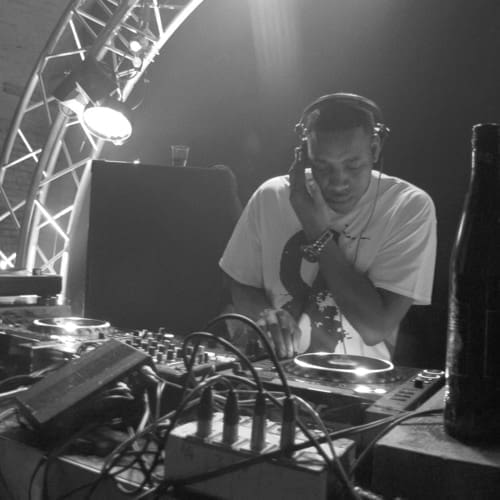
Coki remains active as a DJ worldwide, playing classic tracks alongside new material at underground nights and festivals, proving that his music remains both historically foundational and dynamically present in contemporary scenes.
Production, Collaboration, and Community
Throughout his career, Coki has been a collaborative force as well as an innovator. Through DMZ and later ventures like his Don’t Get It Twisted imprint, he has released music by a wide array of artists who helped expand the dubstep lexicon. His influence is evident in the work of peers and successors alike, and many modern producers cite his early tracks as formative inspirations.
His approach to community—prioritizing ethos and collective experience over individual celebrity—helped set dubstep apart from more commercial electronic trends and ensured its endurance as both a musical and cultural movement.
Legacy and Cultural Impact
Coki’s contributions to electronic music extend far beyond his own discography. As a foundational figure in dubstep’s formation, his work helped create a genre that would influence not only electronic dance music but also pop, hip‑hop, and experimental sound design globally.
Dubstep’s deep bass and rhythmic complexity have permeated mainstream music through festivals, club culture, and cross‑genre collaborations. Producers across bass music, trap, and even bass‑heavy pop have drawn from the sonic blueprint that Coki helped establish in the early 2000s.
His legacy is not simply one of technical innovation, but of cultural creation—helping transform a local London sound into a worldwide phenomenon while maintaining authenticity and community values at its core.
Selected Discography
| Year | Title | Notes |
|---|---|---|
| Early 2000s | All of a Sudden | Solo classic |
| Mid 2000s | Spongebob | Influential defining track |
| Late 2000s | Tortured, Bloodthirst | Underground staples |
| 2025 | Crystal Lake EP | Recent EP release |
| 2025 | Full Level (with Cami Flores) | Recent single |
While Coki’s career has been rooted in underground culture rather than the mainstream awards circuit, his impact has been recognized by industry peers, dedicated fanbases, and cultural commentators. His music is celebrated as foundational in dubstep’s evolution, and his ongoing activity confirms that his creative voice remains vital.


