Chicago’s Groove Architect and Global House Visionary

Derrick Carter was born on October 21, 1969, in Compton, California, United States, and relocated to Chicago at a young age. It was in Chicago—the city widely regarded as the birthplace of house music—that Carter’s identity was forged.
Raised during a transformative period in American urban music culture, Carter came of age as disco evolved into house, and radio waves carried the revolutionary sounds emerging from underground clubs.
While detailed public records about his parents and siblings remain relatively private, Carter has frequently acknowledged the importance of Chicago’s Black musical ecosystem in shaping his worldview.
His education was rooted less in formal conservatories and more in lived experience. Chicago itself became his classroom. As a teenager, Carter immersed himself in DJ culture, absorbing techniques from local pioneers and practicing relentlessly.
The Teenage Prodigy: Early DJ Career
By the age of nine, Carter was already experimenting with DJ equipment. In his early teens, he began performing at school events and local gatherings, demonstrating remarkable technical fluency. By 16, he was producing records and earning respect within Chicago’s competitive DJ circles.
Carter attended Columbia College Chicago, where he studied communications and further refined his production skills. His exposure to media studies complemented his musical pursuits, giving him a broader understanding of cultural narrative and audience engagement.
The late 1980s and early 1990s saw Carter releasing tracks under various aliases, contributing to Chicago’s burgeoning house catalog. His early works fused deep basslines with playful sampling and jazz-influenced flourishes.
Collaborations and the Cajual Era
A pivotal chapter in Carter’s career came through his association with Cajmere (Green Velvet), another Chicago house luminary. Together, they co-founded the influential label Cajual Records in the early 1990s.
Cajual Records became a cornerstone of Chicago house’s second wave, releasing records that emphasized groove, personality, and dancefloor functionality. Carter’s productions during this era were marked by irreverent humor, tight drum programming, and jazz-inspired bass work.
This period solidified Carter’s reputation as both a creative risk-taker and a meticulous craftsman.
The Sound: Funk, Jazz, and Playful Sophistication
Derrick Carter’s musical style defies rigid categorization. His productions are often described as:
- Funk-infused house
- Jazzy and sample-rich
- Deep yet whimsical
- Technically precise
Unlike producers who pursue maximalist intensity, Carter thrives in nuance. His DJ sets are masterclasses in layering—blending acapellas, percussion loops, and basslines with surgical precision. He treats the mixer as an instrument, improvising live with a fluidity that borders on jazz performance.
His influences span disco pioneers, Chicago house founders, and jazz musicians. This eclectic foundation allows him to construct sets that feel both timeless and contemporary.
International Ascendancy
By the mid-1990s, Carter’s reputation extended far beyond Chicago. European audiences, particularly in the United Kingdom, embraced his sound enthusiastically. He became a regular headliner at global festivals and club institutions.
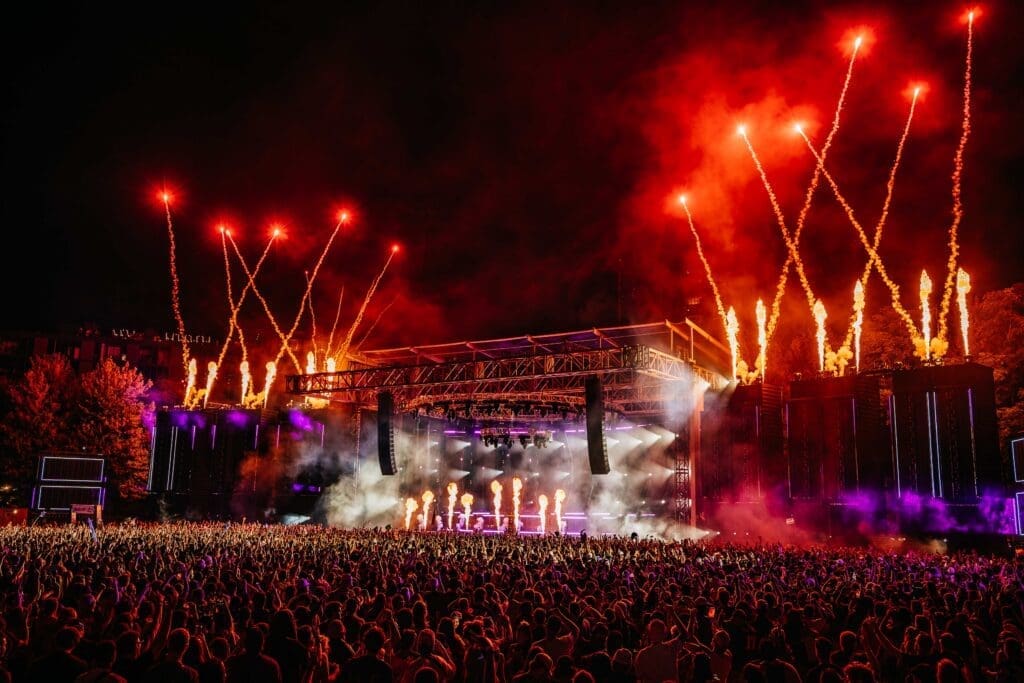
His performances at international events such as Movement Electronic Music Festival and residencies in Ibiza reinforced his global standing. Unlike artists defined by chart success alone, Carter’s acclaim rests on sustained excellence in live performance.
He became a key ambassador for Chicago house abroad, introducing new generations to its groove-centered philosophy.
Discography Highlights
Though Carter has released numerous singles and EPs across decades, some notable works include:
Studio Albums
- Squaredancing in a Roundhouse (1996)
- Where U At? (2002)
Selected Tracks and EPs
- “Brighter Days”
- “Dreaming”
- “Back to the Future”
- Numerous releases on Cajual and Classic Music Company
Awards and Recognition
While Carter’s career is less trophy-driven than commercially mainstream EDM artists, his influence is widely acknowledged within industry circles.
| Year | Recognition | Category |
|---|---|---|
| 1990s–2020s | International DJ Rankings | Consistent Global Presence |
| Multiple Years | Chicago Music Honors | House Music Pioneer Recognition |
| Ongoing | Festival Headliner Status | Global House Ambassador |
His accolades are often measured in peer reverence and cultural longevity rather than mainstream award ceremonies.
Production and Mentorship
Beyond his own catalog, Carter has remixed and collaborated with a wide array of artists, shaping the sound of house labels worldwide. His production techniques—particularly his intricate drum programming and use of swing—have influenced countless producers.
He has also mentored emerging artists, reinforcing Chicago’s tradition of community-driven knowledge sharing. Carter’s openness about technique and philosophy reflects his belief that house music is a collective inheritance.
Challenges and Industry Navigation
Like many pioneers, Carter has navigated shifting musical landscapes. The commercialization of EDM in the 2010s introduced new pressures, favoring spectacle over subtlety. Yet Carter remained committed to groove and craftsmanship.
He has occasionally spoken about the tension between underground authenticity and mainstream visibility. Rather than chase trends, he chose continuity—preserving Chicago house’s essence even as global tastes evolved.
Public Persona and Personal Philosophy
Carter’s public persona balances flamboyance with humility. Known for eclectic fashion choices and magnetic stage presence, he embodies house music’s celebratory spirit.
He often emphasizes inclusivity and community, reflecting house music’s origins within marginalized spaces. Interviews reveal an artist deeply aware of the genre’s cultural roots and responsibilities.
While he maintains relative privacy regarding personal family life, his public statements underscore gratitude, resilience, and devotion to craft.
Recent Activities (2020s–Present)
In the 2020s, Derrick Carter remains an active global performer, touring extensively across Europe, North America, and Asia. His DJ sets continue to attract devoted audiences seeking authentic house experiences.
He has participated in anniversary events celebrating Chicago house history and collaborated with contemporary producers bridging classic and modern aesthetics.
His continued presence demonstrates remarkable longevity in an industry often defined by fleeting trends.
Legacy: The Living Continuum of Chicago House
Derrick Carter’s legacy is inseparable from Chicago itself. He represents the second generation of house music custodians—artists who inherited a revolutionary sound and carried it forward with innovation and joy.
For new listeners exploring electronic dance music, Carter offers a masterclass in groove. His work reminds us that house music is not merely about beats per minute, but about human connection, swing, and shared rhythm.