

The Sonic Architect of Experimental Bass Music
Early Life and the Foundations of a Sound
Born Sander Dennis on October 10, 1983, in Austin, Texas, Sander’s early environment was a melting pot of creativity. Growing up in a household that valued intellectual and artistic pursuit, he was exposed to a diverse range of auditory stimuli from an early age. While the specifics of his family’s private life remain shielded from the public eye, it is clear that his formative years in Texas and his subsequent move to the West Coast played a pivotal role in his sonic evolution.
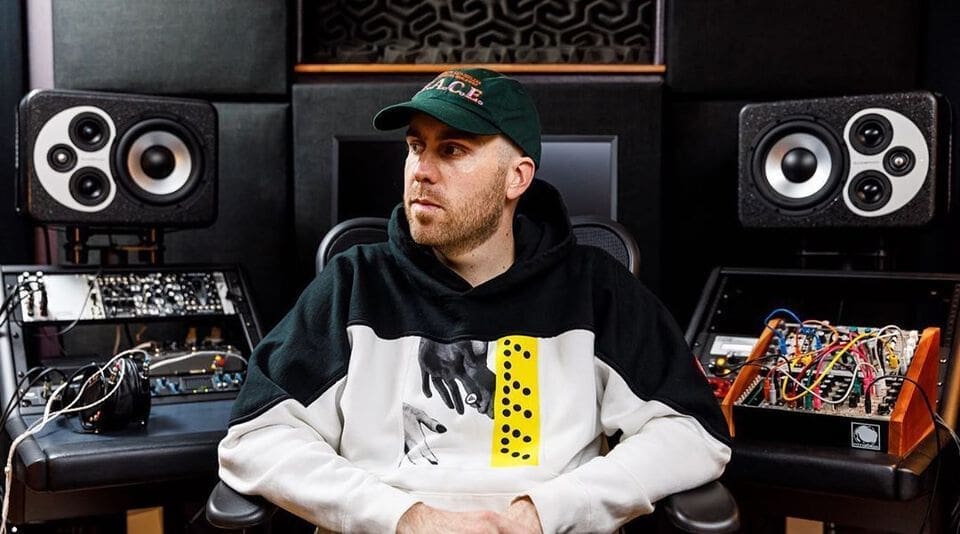
Sander’s education was as much a product of traditional schooling as it was a deep dive into the burgeoning digital revolution of the late 1990s. He became fascinated with the intersection of technology and art, experimenting with early production software and modular synthesis. This technical curiosity would eventually become the hallmark of the “Eprom sound”—a style that treats audio as a physical medium to be stretched, glitched, and reconstructed.
The Ascent: From the Underground to Global Influence
Eprom’s career trajectory is a testament to the power of stylistic integrity. He emerged during a transformative era for electronic music, as the “Glitch-hop” and “Dubstep” movements began to seep into the North American consciousness. However, Eprom refused to be pigeonholed. His early releases on labels like Warp Records and Rwina signaled the arrival of a producer who was more interested in the “deconstruction” of the dancefloor than merely keeping it moving.
His breakthrough came through a series of EPs that showcased his ability to blend high-concept sound design with bone-shaking low-end frequencies. By the time he released his seminal albums, such as Metahuman (2012) and Halflife (2013), he had established himself as a “producer’s producer”—the artist your favorite artists listen to for inspiration.
Shades of Influence and the “Acid” Aesthetic
Eprom’s artistry is a bridge between the analog past and the digital future. His influences are a complex web of 90s IDM (Intelligent Dance Music), rave culture, and the “Acid” house movements of the UK and Chicago. He cites the legendary Aphex Twin and Squarepusher as spiritual predecessors, sharing their penchant for chaotic complexity and hardware-driven soul.
Furthermore, his work is deeply inspired by “Cyberpunk” aesthetics and the tension between humanity and machinery. This is reflected in his choice of equipment; Eprom is a noted proponent of analog gear, often using his hands-on interaction with synthesizers to create unpredictable, “human” errors in his digital compositions.
Major Collaborations and the SHADES Project
Perhaps one of the most significant milestones in Eprom’s career is his collaboration with fellow producer Alix Perez under the moniker SHADES. Formed in the mid-2010s, SHADES became a vessel for a darker, more industrial iteration of bass music. Their work has been hailed as a masterclass in minimalism and atmosphere, influencing a generation of “Left-field” bass producers.
Beyond his own projects, Sander has been a silent force behind several high-profile industry shifts. He has contributed production and remixes for a wide array of artists, ranging from the mainstream crossover of Flume to the experimental depths of The Glitch Mob. His ability to inject a sense of “uncomfortably cool” texture into any track has made him a coveted collaborator in the studio.
Challenges, Controversies, and the Digital Divide
Navigating a career in the independent electronic scene is not without its hurdles. Eprom has often spoken out about the challenges of the “streaming era” and the struggle to maintain artistic value in a landscape dominated by algorithms. While he has avoided the tabloid-style controversies of pop-EDM stars, he has faced the “creative exhaustion” that comes with being a pioneer.
A notable challenge in his career was the transition into a post-pandemic world, where the live “Eprom Experience”—often involving complex visual mapping and high-fidelity sound systems—had to be reimagined. He navigated this by leaning further into digital innovation, utilizing platforms like Twitch to deconstruct his tracks live for thousands of aspiring producers.
Artistry and Recent Milestones
In recent years, Eprom has only accelerated his output. His 2023 album, Syntheism, was accompanied by a groundbreaking live show that utilized robotics and advanced light arrays, further blurring the line between a concert and a laboratory experiment. This project served as a manifesto for his belief that music should be a physical, immersive event.
His perspective on his own work is often humble yet precise. In interviews, he frequently discusses the concept of “unconventional beauty”—finding the rhythm in static and the melody in a malfunctioning machine.
Legacy and Cultural Impact
Eprom’s legacy is defined by his refusal to compromise. He helped move the “Bass” genre away from generic tropes and into the realm of high art. He has been a mentor to countless producers, and his sound design techniques are taught in music production schools globally. He didn’t just join the EDM movement; he gave it a brain and a sharper edge.
Discography Summary & Notable Works
| Year | Title | Type | Key Note |
| 2012 | Metahuman | Album | Established the “Eprom” sound globally. |
| 2013 | Halflife | Album | A darker exploration of glitch and bass. |
| 2015 | SHADES (with Alix Perez) | Debut EP | Launched a new era of industrial bass. |
| 2017 | Pineapple | Single | Became a staple “ID” track in global DJ sets. |
| 2019 | Aikon | EP | Pushed the limits of modular synthesis. |
| 2023 | Syntheism | Album | A multimedia masterpiece of modern electronica. |
Awards and Recognition
- A2IM Libera Awards: Nominated for Best Electronic Album.
- DJ Mag: Repeatedly cited in “Best of” lists for sound design and production.
- Red Bull Music Academy: Honored as a guest lecturer and featured artist.
- Global Festivals: Headliner status at Coachella, Electric Forest, and Shambhala.


