

The Minimalist Visionary Who Redefined Drum & Bass
Early Life and Background
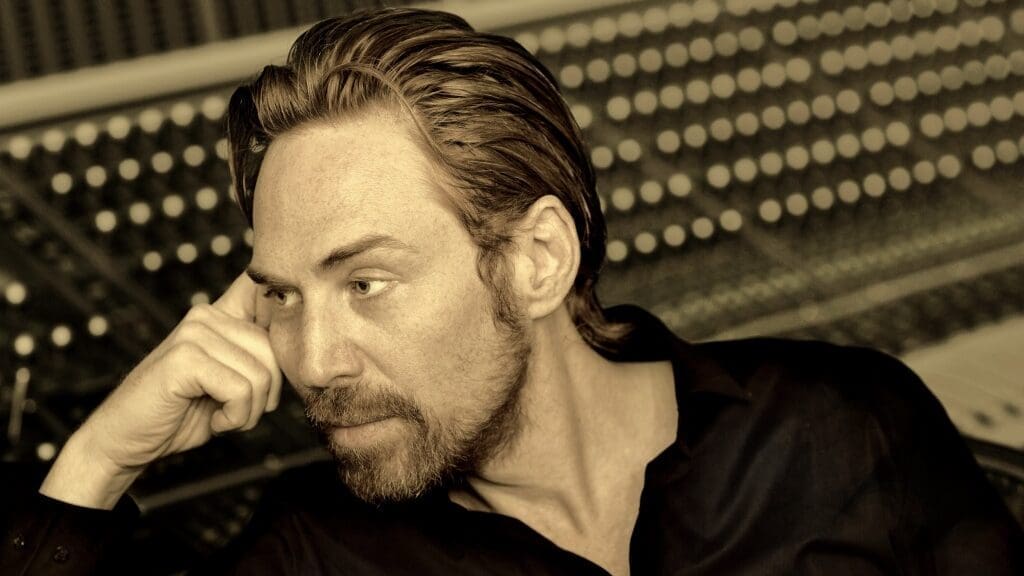
Photek, born Rupert Parkes in 1972 in London, stands among the most influential and intellectually rigorous figures in electronic music. Known for his precision, restraint, and uncompromising artistic vision, Parkes transformed drum and bass into a genre capable of extraordinary subtlety and technical sophistication.
Raised in London during a period of rapid cultural and musical change, Parkes grew up immersed in a city where sounds from across the globe collided. His family background, though largely private, provided a stable environment that encouraged creativity and independent thinking. From an early age, he displayed a keen interest in rhythm and sound, gravitating toward music that emphasized complexity and atmosphere.
His education included exposure to both traditional musicianship and emerging digital technologies. While not widely documented as formally classically trained, Parkes developed a deep understanding of rhythm, timing, and sonic space—skills that would later define his work.
Entry into Music and Early Influences
Photek’s early musical interests were shaped by a diverse palette. He drew inspiration from jazz, funk, hip-hop, and early electronic pioneers, including figures like Herbie Hancock and Kraftwerk. These influences instilled in him a fascination with rhythm as both a structural and expressive tool.
In the late 1980s and early 1990s, London’s underground scene—particularly the rise of jungle and breakbeat hardcore—provided fertile ground for experimentation. Parkes began producing music under various aliases before adopting the name Photek.
His early releases quickly distinguished him from his peers. While much of the jungle scene favored high-energy chaos, Photek pursued minimalism, precision, and control, crafting tracks that felt almost architectural in their design.
Breakthrough and Rise to Prominence
Photek’s breakthrough came in the mid-1990s with a series of groundbreaking releases that redefined the possibilities of drum and bass. Tracks such as “Ni-Ten-Ichi-Ryu” and “The Hidden Camera” showcased his signature approach: sparse arrangements, razor-sharp drum programming, and a cinematic sense of tension.
His debut album, Modus Operandi (1997), is widely regarded as one of the most important works in electronic music history. The album’s intricate rhythms and atmospheric depth elevated drum and bass into a form of high art, challenging listeners to engage with the genre in new ways.
Unlike many of his contemporaries, Photek resisted the commercial pressures of the time, choosing instead to refine his craft and maintain artistic integrity.
Artistic Style and Innovation
Photek’s music is defined by its minimalist complexity—a paradox that lies at the heart of his genius. His style includes:
- Intricately programmed breakbeats with surgical precision
- Sparse, carefully constructed arrangements
- Cinematic textures and tension-driven atmospheres
- A focus on rhythm as a primary expressive element
He approached music production almost scientifically, often deconstructing rhythms to their core components and rebuilding them with meticulous attention to detail.
His work stands in contrast to the more melodic or aggressive strands of drum and bass, offering instead a deeply cerebral listening experience.
Discography and Major Works
Selected Discography
| Year | Album | Notes |
|---|---|---|
| 1997 | Modus Operandi | Genre-defining debut |
| 2000 | Form & Function | Compilation of early works |
| 2007 | Form & Function Vol. 2 | Continued exploration |
| 2011 | Avalanche | Return with a more contemporary sound |
| 2014 | KU:PALM | Fusion of bass music and cinematic scoring |
Modus Operandi remains his most celebrated work, often cited as a masterpiece of drum and bass and electronic music as a whole.
Transition and Evolution
In the early 2000s, Photek began to shift his focus away from traditional drum and bass, exploring house, techno, and film scoring. This transition reflected both personal artistic evolution and broader changes within the electronic music landscape.
He relocated to Los Angeles, where he expanded his work into film and television composition. His scoring credits include projects such as How to Get Away with Murder, for which he received critical acclaim.
This period marked a significant transformation, demonstrating his versatility and ability to adapt his sonic language to different mediums.
Collaborations and Industry Contributions
Throughout his career, Photek has collaborated with a wide range of artists and contributed to various aspects of the music industry. His influence extends beyond his own releases, shaping the work of countless producers.
His approach to rhythm and sound design has inspired artists across genres, from drum and bass to techno and experimental electronic music. While not known for high-profile collaborations in the mainstream sense, his indirect influence is profound.
Awards and Recognition
Photek’s work has earned widespread critical acclaim, particularly for its innovation and technical excellence.
Selected Recognition
| Year | Award / Recognition | Category |
|---|---|---|
| Late 1990s | Critical acclaim for Modus Operandi | Landmark album |
| 2010s | Emmy Award nomination | Television scoring |
| Ongoing | Industry recognition | Pioneer of minimal drum & bass |
His contributions to television scoring have further expanded his recognition beyond the electronic music community.
Challenges and Artistic Independence
Photek’s career has been marked by a consistent tension between artistic integrity and commercial viability. His refusal to conform to mainstream trends occasionally limited his commercial exposure but reinforced his reputation as a purist.
Additionally, his transitions between genres and mediums posed challenges in maintaining a cohesive public identity. However, these shifts also highlight his adaptability and creative ambition.
Personal Life and Philosophy
Rupert Parkes has maintained a notably private personal life, allowing his work to speak for itself. His artistic philosophy emphasizes:
- Precision and discipline
- Innovation through limitation
- The emotional power of rhythm
In interviews, he has often described music as a form of exploration—an ongoing process of discovery rather than a fixed destination.
Recent Activities and Continuing Influence
In recent years, Photek has continued to balance music production with scoring work, contributing to film and television while maintaining a presence in electronic music.
His later releases reflect a synthesis of his earlier drum and bass innovations with contemporary production techniques, ensuring his continued relevance in a rapidly evolving industry.
Legacy and Cultural Impact
Photek’s legacy is profound and enduring. His contributions include:
- Redefining drum and bass as an art form
- Pioneering minimalist and technical approaches to rhythm
- Influencing generations of producers across multiple genres
- Bridging electronic music with film and television scoring
For newcomers to EDM, Photek represents a different dimension of the genre—one that prioritizes intellect, precision, and atmosphere over immediate impact.
Photek’s journey is one of quiet revolution. Through his meticulous approach to sound and unwavering commitment to artistic exploration, Rupert Parkes reshaped the possibilities of electronic music.
In an industry often driven by trends and immediacy, he stands apart as a visionary who chose depth over spectacle. His work continues to resonate, offering listeners a glimpse into the intricate architecture of rhythm and sound.


