

The Deep House Visionary Who Expanded the Spiritual Horizons of Dance Music
Early Life and Background
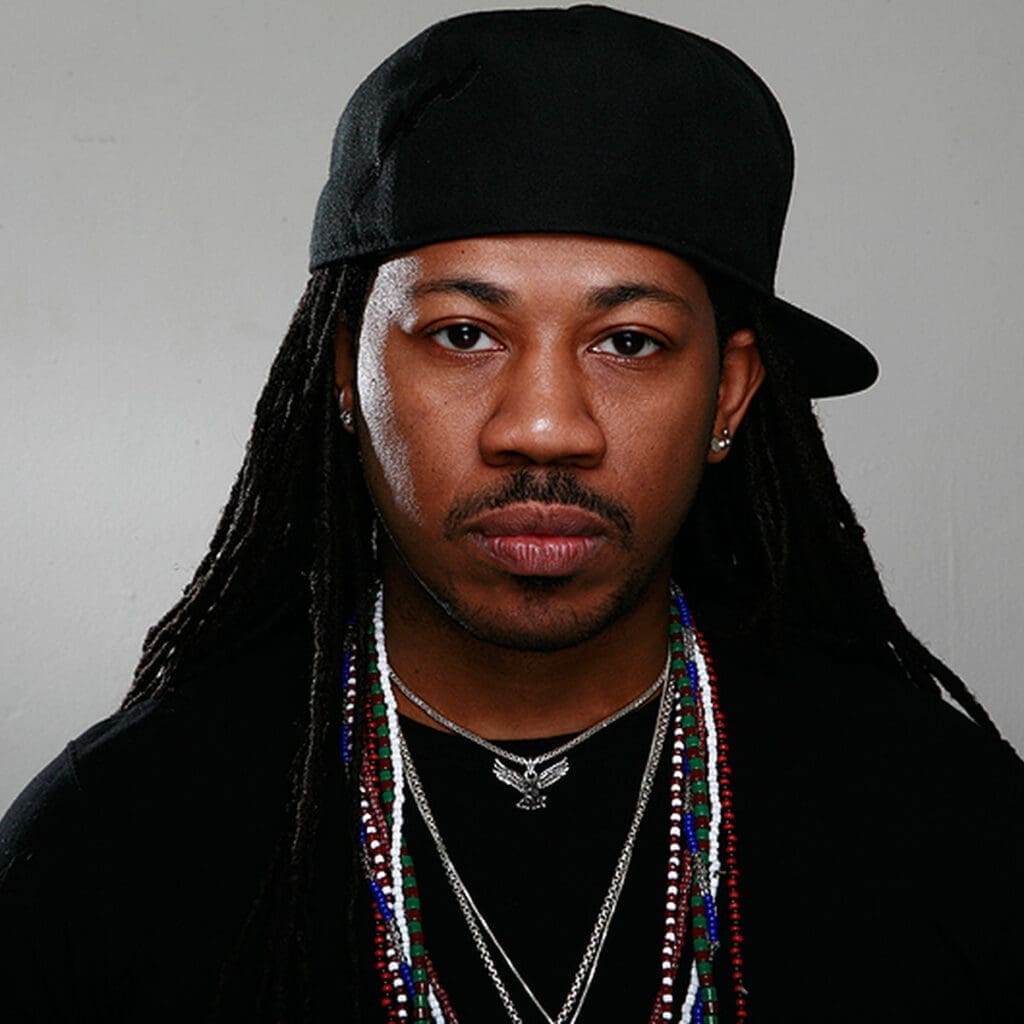
Ronald Trent, known professionally as Ron Trent, was born May 16, 1969, in Chicago, Illinois, United States—the city widely recognized as the birthplace of house music.
Trent spent part of his childhood in Washington, D.C., before returning to Chicago during his teenage years. This early geographical movement exposed him to diverse musical environments. Washington’s vibrant go-go and funk scenes blended with Chicago’s rapidly evolving house culture, giving the young Trent a broad sonic palette that would later define his work.
Music was a constant presence in his household. His family listened to jazz, soul, and funk records, artists whose sounds would profoundly shape his artistic instincts.
By his teenage years, Trent had begun experimenting with musical instruments and studio equipment, developing an early fascination with synthesizers, drum machines, and recording technology.
He attended Emil G. Hirsch Metropolitan High School in Chicago, where his interest in music production intensified. During this period he began crafting early recordings using affordable electronic equipment, teaching himself the fundamentals of composition and studio engineering.
Entering Chicago’s House Music Scene
By the mid-1980s, Chicago was experiencing a cultural revolution driven by the emergence of house music. DJs like Frankie Knuckles, Ron Hardy, and Larry Heard were redefining nightclub culture with hypnotic rhythms and soulful electronic soundscapes.
Ron Trent, still a teenager, became captivated by this movement. At just 14 years old, he began producing tracks and experimenting with recording techniques. His early work quickly attracted attention within Chicago’s underground dance community.
In 1987, while still in high school, Trent released what would become one of the most important early deep house records: “Altered States.”
Breakthrough: “Altered States” and Deep House Innovation
Released in 1988, Altered States—a collaboration with fellow producer Armando Gallop—is widely considered one of the foundational records of deep house music.
The track combined:
- hypnotic basslines
- atmospheric synthesizers
- tribal percussion
- spacious production techniques
Its innovative structure pushed house music beyond the raw, stripped-down energy of early Chicago tracks, introducing a more immersive and spiritual aesthetic.
For many historians of dance music, Altered States represents a turning point in electronic music’s evolution. It demonstrated that house could be both dancefloor-oriented and emotionally expansive, a philosophy that would guide Ron Trent’s career.
Expanding the Sound: The Prescription Records Era
In the early 1990s, Ron Trent partnered with Chicago producer Chez Damier to launch the influential label Prescription Records.
Prescription Records became one of the most respected underground house labels of the decade. Its releases emphasized musical depth, extended arrangements, and organic instrumentation—qualities that distinguished deep house from more commercial dance music.
During this era, Trent released a series of influential works, including:
- Morning Factory
- Atmosphere
- The Afterlife EP
These records helped expand the boundaries of house music, blending jazz chords, African rhythms, and ambient textures into richly layered compositions.
Musical Philosophy and Influences
Ron Trent’s music is deeply rooted in the traditions of African-American musical heritage. His sound draws heavily from:
- jazz improvisation
- funk basslines
- soul harmonies
- Afro-Caribbean percussion
- spiritual and ambient music
Artists who influenced his approach include:
- Herbie Hancock
- Miles Davis
- Sun Ra
- George Clinton
Trent has frequently described house music as a spiritual continuum, connecting electronic rhythms to the broader lineage of Black musical expression.
His productions often feature long, evolving arrangements that encourage listeners to lose themselves in rhythm and atmosphere.
Major Albums and Discography
Although Ron Trent is known primarily for singles and EPs, he has released several influential albums that showcase his expansive musical vision.
Selected Studio Albums
| Year | Album |
|---|---|
| 1998 | Primitive Arts |
| 2003 | Dance Classic |
| 2005 | African Indigenous Rhythms |
| 2017 | Spaces and Places |
Spaces and Places became one of his most celebrated modern works, blending house grooves with world music influences and featuring collaborations with international musicians.
Collaborations and Production Work
Throughout his career, Ron Trent has collaborated with numerous artists and vocalists, helping bridge underground dance music with broader musical traditions.
Notable collaborators include:
- Chez Damier
- DJ Spinna
- Amp Fiddler
- Erykah Badu
His remix catalog is extensive, with reinterpretations of tracks across soul, jazz, and electronic music.
Labels and Industry Leadership
Beyond production and DJing, Ron Trent has played a vital role as a music entrepreneur and cultural curator.
He founded several influential labels, including:
- Prescription Records
- Future Vision Records
- Music and Power
These platforms allowed him to release his own music while supporting emerging producers aligned with his artistic philosophy.
Global DJ Career
Ron Trent’s reputation as a DJ is legendary within underground dance circles. His sets are known for their long-form storytelling, blending house with jazz, disco, soul, and Afrobeat.
He has performed in major cultural centers worldwide, including:
- Berlin
- London
- Tokyo
- New York
- Paris
- São Paulo
Rather than focusing solely on peak-time club energy, Trent’s performances often create immersive musical journeys, reflecting his belief that dance music can be both celebratory and meditative.
Awards and Recognition
While underground dance music historically receives fewer mainstream awards, Ron Trent has earned enormous respect within the global music community.
| Recognition | Significance |
|---|---|
| Deep House Pioneer | Widely credited as a founder of the genre |
| Global DJ Icon | Three decades of international touring |
| Cultural Innovator | Bridging house music with jazz, funk, and global rhythms |
| Influential Producer | Inspiration for multiple generations of electronic artists |
His records continue to be rediscovered by younger DJs, ensuring their presence in modern club culture.
Personal Philosophy and Public Life
Ron Trent has often spoken about the spiritual dimension of music. In interviews, he describes dance floors as communal spaces where rhythm connects people beyond language or culture.
He views music production as both artistic expression and cultural preservation, maintaining strong ties to the historical roots of Black American music.
Despite his global influence, Trent has maintained a relatively private personal life, choosing to focus public attention on his music rather than celebrity culture.
Challenges and Industry Evolution
Like many artists who began in the vinyl era, Ron Trent has witnessed dramatic transformations in the music industry—from physical records to digital streaming and social media promotion.
Adapting to these changes while maintaining artistic integrity has been a challenge faced by many pioneering producers. Yet Trent has successfully navigated these shifts, continuing to release music and perform internationally.
Recent Work and Continuing Influence
In recent years, Ron Trent has remained highly active as both a producer and DJ. His releases continue to explore global musical influences, incorporating African rhythms, jazz instrumentation, and electronic production techniques.
Younger producers frequently cite him as a major inspiration, particularly those working in:
- deep house
- soulful house
- Afro-house
- jazz-infused electronic music
Legacy
Ron Trent’s legacy is monumental within electronic music history. His work helped define deep house as an art form, proving that dance music could be emotionally rich, culturally rooted, and spiritually expressive.
Today, his influence can be heard in countless producers across the world who seek to create dance music that transcends simple entertainment and becomes a form of musical storytelling.


