

The Bass Revolutionary Who Helped Shape Modern Dubstep
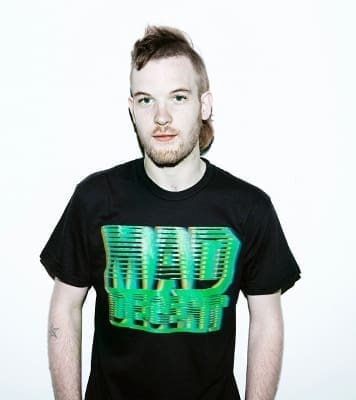
Born Christopher William Mercer on 26 January 1985 in Leeds, England, Rusko emerged from the vibrant UK club ecosystem of the mid-2000s to become one of dubstep’s defining figures. Over nearly two decades, he has continually evolved—from early wobble-bass anthems to experiments with drum and bass, reggae, hip-hop, and electronic pop collaborations—while maintaining a distinctive sonic identity rooted in British sound system culture.
This is the story of Rusko: the unlikely academic musician who became a central figure in the worldwide explosion of bass music
Early Life and Musical Foundations
Christopher William Mercer was born in Leeds, in the county of West Yorkshire, England, and raised largely in the nearby historic city of York.
Growing up in a family that valued music and creativity, Mercer was exposed early to a wide range of sounds. His childhood involved learning multiple instruments, including piano, saxophone, and guitar, which helped develop his musical fluency long before he entered electronic music production.
He spent much of his youth in the village of Wheldrake, just outside York. Friends and teachers quickly recognized his musical aptitude, and he later attended Fulford School, where he continued developing his interest in performance and composition.
Mercer eventually enrolled at the Leeds College of Music, one of the United Kingdom’s leading conservatories for contemporary music. There he studied Music Performance, graduating with a formal academic grounding in music theory and instrumentation.
Ironically, the electronic genre that would make him famous entered his life almost by accident.
Discovering Dubstep and the “Sub Dub” Scene
During his university years, Mercer began attending a Leeds club night known as Sub Dub, held at the West Indian Centre. These events featured emerging dubstep artists from London’s underground scene, including influential pioneers like Digital Mystikz.
Dubstep—then a shadowy offshoot of UK garage and sound system culture—was characterized by heavy bass frequencies, half-time rhythms, and spacious, dub-inspired production. Mercer was captivated by its potential.
In later interviews, Rusko has described the moment he first heard dubstep as a revelation. He realized the genre allowed a producer to treat bass itself as the central melodic instrument. Fascinated, he began experimenting with the distinctive wobbling basslines that would soon become his signature.
Early Career and Breakthrough (2006–2008)
Rusko’s first official releases appeared in 2006, including the track “SNES Dub.” The song immediately stood out for its playful approach to dubstep—a contrast to the darker, more minimal style dominating the genre at the time.
His early music appeared on influential UK labels such as:
- Dub Police
- Sub Soldiers
- 2nd Drop Records
Around this time he formed a creative partnership with fellow producer Caspa (Gary McCann), another key figure in the London dubstep scene. Their collaboration became legendary within bass music circles.
Together they released “FabricLive.37” (2007), a DJ mix album that showcased dubstep to a wider global audience. The mix helped codify the genre’s sonic identity and is widely considered a landmark moment in dubstep’s early history.
By the late 2000s, Rusko was emerging as one of the genre’s most exciting personalities—both for his productions and his famously chaotic live sets.
The Rise of the “Wobble Bass” Era
Rusko’s style diverged from the dark minimalism of early dubstep. Instead, he introduced a more funky, upbeat, and playful sound built around exaggerated bass modulations known as “wobbles.”
His tracks from this period became club anthems, including:
- “Cockney Thug”
- “Woo Boost”
- “Acton Dread”
- “Babylon Vol. 1”
These records helped shift dubstep toward a more accessible style. The heavy bass drops and rhythmic wobble patterns would later inspire an entire generation of producers, particularly in North America.
Some critics later dubbed this approach “brostep,” though Rusko himself always rejected rigid genre labels. His intent, he explained, was simply to make “music that makes people smile and dance.”
International Breakthrough and O.M.G! (2010)
Rusko’s career reached a new level in 2010 with the release of his debut studio album:
O.M.G.! (2010)
The record, released through Mad Decent—the label founded by Diplo—introduced his sound to a global audience.
Key tracks included:
- “Woo Boost”
- “Hold On” (featuring Amber Coffman)
- “Everyday”
The album blended dubstep with rave influences, reggae textures, and pop songwriting structures. Critics noted its exuberant tone compared with darker contemporaries.
The success of O.M.G! helped push dubstep into mainstream dance music, particularly in the United States.
Collaborations and Cross-Genre Experiments
As Rusko’s reputation grew, he began collaborating across genres, producing and remixing tracks for artists in hip-hop, pop, and electronic music.
Notable collaborators include:
- M.I.A.
- Cypress Hill
- Damian Marley
- Sub Focus
- Kelis
- Pixie Lott
One of his most notable crossover projects was “Cypress X Rusko” (2012), a collaboration with hip-hop legends Cypress Hill that fused dubstep with West Coast rap and reggae influences.
Rusko also became known for remixes of major pop artists, including reinterpretations of songs by Lady Gaga, Adele, and The Prodigy.
These remixes played a role in introducing dubstep sounds to mainstream audiences during the early 2010s.
Industry Conflicts and Independence
Despite commercial success, Rusko’s relationship with major labels was sometimes turbulent.
In 2012, he publicly expressed frustration with the handling of his music releases. After disputes with his label over creative direction and scheduling, he announced plans to release future music independently—at times even giving away tracks for free.
This move reflected a broader philosophy Rusko often expressed in interviews: that electronic music should remain rooted in community, experimentation, and club culture, rather than commercial expectations.
He later released music through labels including:
- OWSLA
- Monstercat
- Dub Police
- Sub Soldiers
Health Crisis and Triumph (2017–2018)
In May 2017, Rusko shocked fans by announcing that he had been diagnosed with Gastric lymphoma, a rare cancer affecting the stomach.
He canceled his touring schedule and began chemotherapy treatment.
The EDM community rallied around him, with fellow producers and fans offering widespread support. After several months of treatment, Rusko announced in late 2017 that he was cancer-free.
His return to the stage in February 2018 was widely celebrated, symbolizing resilience and the close-knit nature of the global bass music scene.
Later Career and Musical Evolution (2018–Present)
Following his recovery, Rusko continued releasing music while exploring new styles.
His later work has often incorporated drum and bass, reflecting another major branch of UK bass music culture.
Recent projects include:
- Mac 19 EP (2021)
- Shut Ya Mouth (2021)
- 1 Man Army EP (2025)
He has also reunited periodically with longtime collaborator Caspa, performing back-to-back DJ sets that celebrate the early days of dubstep.
Even after nearly two decades, Rusko remains a regular presence at major electronic festivals and bass music events around the world.
Musical Style and Influences
Rusko’s sound draws heavily from several musical traditions:
- Jamaican dub and reggae
- UK sound system culture
- Drum and bass
- Rave and breakbeat
- Early dubstep pioneers
Unlike many contemporaries, Rusko embraced humor and musical playfulness in his productions. His tracks often feature cartoonish synths, vocal samples, and unpredictable bass rhythms.
This attitude helped make his music accessible to audiences unfamiliar with the darker side of UK underground electronic music.
Public Persona and Personal Life
Rusko has long been known for his colorful stage presence. His DJ sets are typically high-energy, often involving spontaneous crowd interaction and genre-blending mixes.
He married Belinda Mercer, and though he keeps much of his private life away from the spotlight, he has spoken openly about his experiences with illness and recovery.
Following his cancer treatment, Rusko often expressed gratitude toward fans and fellow artists for their support, emphasizing the sense of community within electronic music culture.
Discography (Selected)
Studio Albums
| Year | Album |
|---|---|
| 2010 | O.M.G.! |
| 2012 | Songs |
Collaborative Albums
| Year | Project |
|---|---|
| 2007 | FabricLive.37 (with Caspa) |
| 2012 | Cypress X Rusko (with Cypress Hill) |
Selected Singles & EPs
- SNES Dub (2006)
- Cockney Thug (2009)
- Woo Boost (2010)
- Hold On (feat. Amber Coffman) (2010)
- Everyday (2011)
- Mac 19 EP (2021)
- Shut Ya Mouth (2021)
- 1 Man Army EP (2025)
Awards and Recognition
While Rusko’s career has been rooted more in underground credibility than mainstream awards, he has received numerous accolades from the electronic music community.
| Year | Recognition | Category |
|---|---|---|
| 2007 | FabricLive DJ Mix Series | Landmark Dubstep Release |
| 2010 | Global EDM Press | Breakthrough Dubstep Artist |
| 2010s | International Festival Circuit | Headlining Bass Music DJ |
His tracks have also appeared in major video games and festival performances worldwide.
Legacy: Architect of Modern Dubstep
Rusko occupies a crucial place in the history of electronic music. Alongside figures such as Skream, Benga, and Caspa, he helped transform dubstep from a small London subculture into a global movement.


