

Detroit’s Deep House Vanguard and the Art of Collective Expression
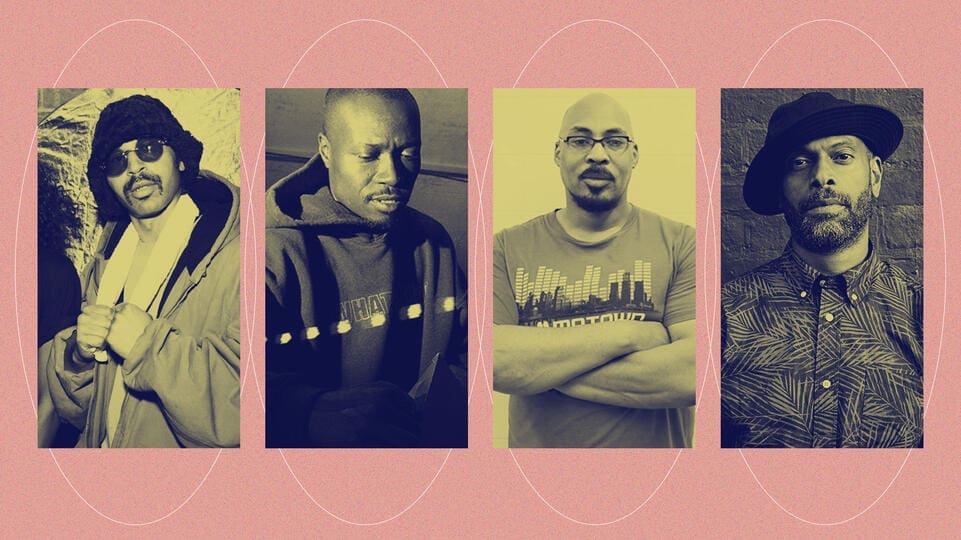
The Men Behind the Chairs: Origins and Early Lives
Unlike typical EDM acts, 3 Chairs cannot be understood through a single biography. Instead, its identity emerges from the convergence of four distinct life stories—each deeply entwined with Detroit’s musical heritage.
Theo Parrish (Theodore Parrish)
Born in Washington, D.C., and raised in Chicago before relocating to Detroit, Parrish absorbed the legacy of Chicago house and Detroit techno. Influenced by pioneers such as Ron Hardy and Frankie Knuckles, he developed a philosophy that treats DJing as storytelling and music as a spiritual practice.
Rick Wilhite
A Detroit native, Wilhite grew up immersed in the city’s evolving club scene. A key member of the The Godson crew, his style is rooted in raw groove and dancefloor functionality, shaped by early exposure to radio DJs and neighborhood parties.
Marcellus Pittman
Also from Detroit, Pittman’s early years were steeped in funk, jazz, and soul. His experimental tendencies and playful rhythmic structures reflect a willingness to push beyond traditional house frameworks.
Kenny Dixon Jr. (Moodymann)
Born and raised in Detroit, Dixon’s upbringing in a musically rich family—reportedly connected to jazz and Motown traditions—deeply influenced his sound. As Moodymann, he became one of the most distinctive voices in house music, blending sensuality, social commentary, and raw analog textures.
Formation: The Emergence of 3 Chairs
3 Chairs began not as a formal project but as an organic extension of friendship and shared philosophy in the late 1990s. Studio sessions—often spontaneous and improvisational—became the foundation of their collaborative identity.
The name “3 Chairs” is intentionally cryptic, widely believed to reference a moment when only three chairs were available for four artists in the studio. This paradox encapsulates their ethos: limitation as creativity, absence as presence, and individuality within unity.
Their early recordings were released in limited vinyl runs, often without extensive promotion—cementing their reputation as artists’ artists.
Musical Style: Deep House as Cultural Expression
3 Chairs’ sound resists easy categorization, though it is most commonly associated with deep house. Their music is defined by:
- Analog warmth and lo-fi textures
- Extended grooves with minimal structure
- Soul, jazz, and funk influences
- Improvisational layering and live-feel production
Unlike the polished precision of mainstream EDM, 3 Chairs embraces imperfection. Their tracks often feel like captured moments—alive, shifting, and deeply human.
Their work draws lineage from Detroit techno pioneers such as Juan Atkins, Derrick May, and Kevin Saunderson, while maintaining a distinct emphasis on groove over futurism.
Discography and Key Releases
3 Chairs’ catalog is intentionally sparse, yet every release carries significant weight within the underground.
Selected Releases
- 3 Chairs EP (2002)
- Various split releases and white-label pressings
- Contributions across Sound Signature and Mahogani Music
Their recordings are often sought-after collector’s items, with vinyl pressings becoming prized artifacts in DJ culture.
Collaborations and Broader Contributions
Beyond their work as 3 Chairs, each member has made profound contributions to electronic music:
- Theo Parrish’s Sound Signature label has championed experimental house artists
- Moodymann’s Mahogani Music has preserved Detroit’s soul-infused house tradition
- Rick Wilhite and Marcellus Pittman have influenced generations through DJing and mentorship
Their collective influence extends into movements such as lo-fi house, soulful house, and underground techno, shaping artists worldwide.
Live Performances: Rare and Revered
Performances by 3 Chairs are rare, often occurring in intimate settings or special events in Detroit. When they do appear—sometimes linked to gatherings around the Movement Electronic Music Festival—their sets are less performances and more communal experiences.
Blurring the line between DJing and live improvisation, they create immersive journeys that prioritize connection over spectacle.
Challenges and Resistance to Commercialization
One of the defining aspects of 3 Chairs is their deliberate distance from mainstream success. This choice has presented challenges:
- Limited accessibility due to vinyl-only releases
- Minimal digital presence
- Resistance to branding and commercialization
Yet, this very resistance has become their strength, preserving artistic integrity in an increasingly commodified industry.
Personal Philosophies and Cultural Identity
The members of 3 Chairs share a deep commitment to preserving the Black roots of house music. Their work often reflects:
- Historical awareness of African American musical traditions
- Spiritual and emotional depth
- Community-centered creativity
In interviews, Theo Parrish has emphasized that music should “move people physically and spiritually,” while Moodymann has been outspoken about cultural ownership and authenticity in electronic music.
Awards and Recognition
Though not defined by mainstream accolades, 3 Chairs’ influence is widely acknowledged:
| Category | Recognition | Context |
|---|---|---|
| Underground Legacy | Critical Acclaim | Revered by DJs and collectors globally |
| Cultural Impact | Detroit Music Heritage | Key contributors to the city’s house legacy |
| Industry Influence | Artistic Inspiration | Influenced generations of producers |
Their absence from commercial award circuits underscores their position outside the traditional industry framework.
Recent Activity and Continuing Influence
As of the mid-2020s, 3 Chairs remains an active yet elusive presence. While new releases are rare, the members continue to perform, produce, and mentor through their individual platforms.
Their influence is increasingly visible in younger artists embracing analog production, lo-fi aesthetics, and emotionally driven house music.
Legacy: The Enduring Power of Subtlety
3 Chairs’ legacy is not measured in chart positions or festival headlining slots but in the depth of their impact. They have redefined what it means to create electronic music—shifting the focus from consumption to experience, from perfection to authenticity.
For newcomers to EDM, 3 Chairs offers a different entry point: one that values patience, listening, and emotional engagement. Their music is not designed to overwhelm but to resonate—quietly, profoundly, and enduringly.
In the story of electronic music, 3 Chairs occupies a space that few others inhabit. They are not just artists but custodians of a tradition—one that honors the past while remaining fiercely independent in the present.


