

Origins and Formation
Collective Identity Over Individual Stardom
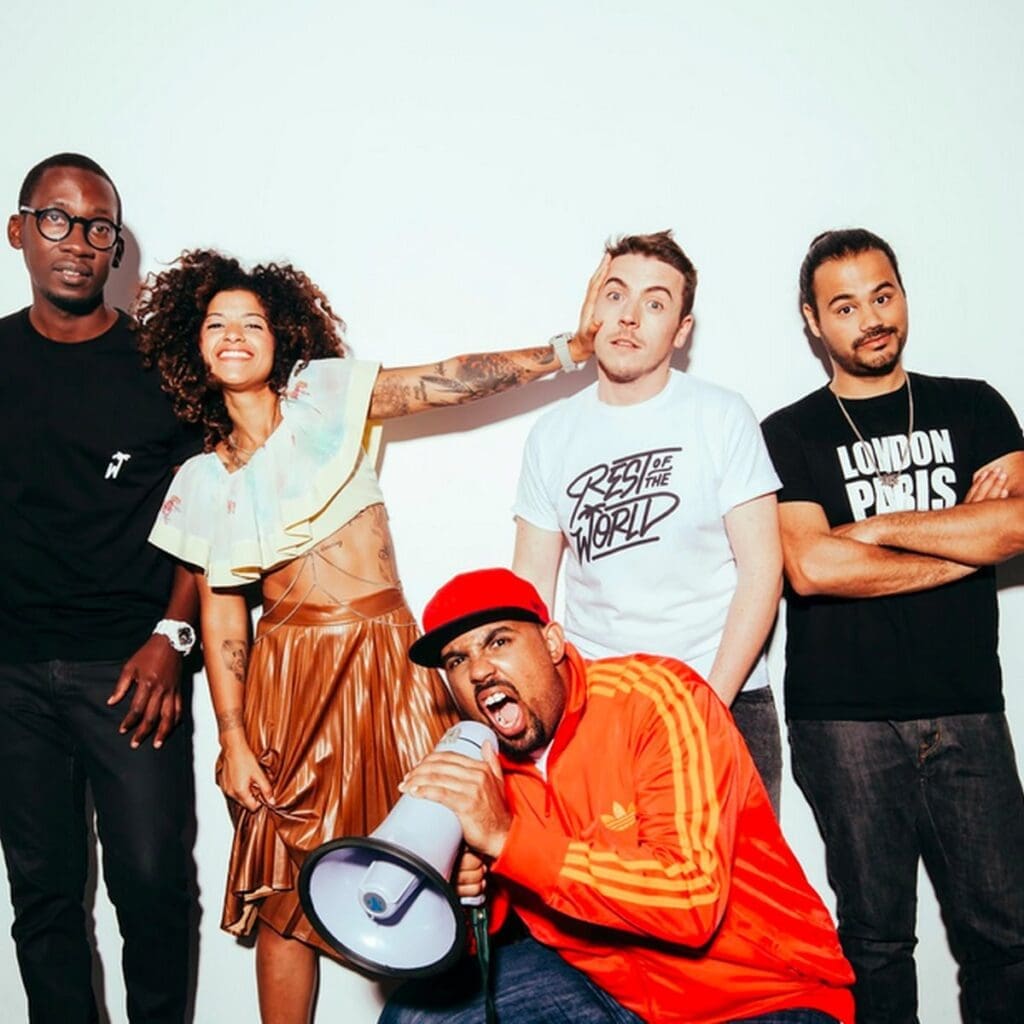
Unlike many EDM acts centered around a singular DJ-producer, Buraka Som Sistema was conceived as a collective. Formed in 2005 in Lisbon, the group’s core members included:
João Barbosa (Branko)
Born: November 28, 1980
Place of Birth: Lisbon, Portugal
Kalaf Ângelo (Kalaf Epalanga)
Born: February 10, 1978
Place of Birth: Benguela, Angola
Rui Pité (DJ Riot)
Born: January 22, 1981
Place of Birth: Lisbon, Portugal
André Reis (Conductor / Andro Carvalho)
Place of Birth: Luanda, Angola
Born: 1975
The group’s name itself is derived from Buraca, a multicultural suburb of Lisbon with a large Angolan immigrant population, and “Som Sistema,” loosely translating to “sound system”—a nod to both Jamaican sound system culture and grassroots club movements.
Cultural and Family Backgrounds
The members came from diverse Lusophone (Portuguese-speaking) backgrounds, particularly Angola and Portugal. This multicultural upbringing proved foundational. Kalaf Ângelo, born in Benguela, brought a direct connection to Angolan musical traditions, while the Lisbon-born members were immersed in the city’s underground club culture.
Education and Early Influences
While none of the members followed a strictly academic path in music, their education was deeply experiential:
- Exposure to Lisbon’s immigrant neighborhoods
- Engagement with underground club scenes
- Early experimentation with DJing, production software, and pirate radio
Musically, their influences ranged widely:
- Traditional Angolan kuduro
- European techno and house
- UK grime and dubstep
- Caribbean dancehall
This fusion of influences would become their signature.
The Rise: From Local Experiment to Global Phenomenon
Breakthrough Moment: “Yah!” (2006)
Their debut EP From Buraka to the World (2006) introduced the track “Yah!”—a high-energy anthem that quickly gained traction in European clubs. It was raw, percussive, and unlike anything dominating EDM at the time.
International Recognition
Their debut album, Black Diamond (2008), marked a turning point. Featuring collaborations with artists from Angola and beyond, it positioned them as ambassadors of a new global club sound.
Key milestones include:
- Performances at major festivals like Glastonbury Festival
- Recognition by international media as pioneers of “global bass”
- Collaborations with artists across continents
Musical Style and Innovation
Kuduro Reimagined
Kuduro, originally from Angola, is characterized by rapid rhythms and energetic dance. Buraka Som Sistema transformed it:
- Increased tempo and electronic layering
- Integration with house and techno structures
- Adaptation for international club audiences
Signature Sound Elements
- Heavy basslines
- Syncopated percussion
- Call-and-response vocals
- Multilingual lyrics (Portuguese, English, and African dialects)
Their music was not just danceable—it was culturally resonant.
Major Works and Discography
Studio Albums
| Year | Album Title |
|---|---|
| 2008 | Black Diamond |
| 2011 | Komba |
| 2014 | Buraka |
Notable Tracks
- “Yah!”
- “Sound of Kuduro” (feat. M.I.A.)
- “Hangover (BaBaBa)”
- “Kalemba (Wegue Wegue)”
“Sound of Kuduro” became a global hit, further bridging underground and mainstream audiences.
Collaborations and Industry Contributions
Buraka Som Sistema’s influence extended beyond their own releases:
- Worked with global artists like M.I.A.
- Inspired a wave of producers in the global bass movement
- Helped introduce African electronic styles to Western audiences
Member Branko, in particular, became a key figure in promoting Lusophone music worldwide through solo projects and label work.
Awards and Recognition
| Year | Award | Category |
|---|---|---|
| 2008 | MTV Europe Music Awards | Best Portuguese Act |
| 2009 | UK Festival Awards | Breakthrough Act |
| Multiple | Portuguese Golden Globes | Music Awards |
Their accolades reflect both national pride and international acclaim.
Challenges and Controversies
Cultural Ownership and Representation
As their popularity grew, discussions emerged حول:
- Who “owns” kuduro?
- The ethics of exporting localized cultural forms
The group addressed this by consistently collaborating with Angolan artists and acknowledging their roots.
Navigating Industry Pressures
Balancing underground credibility with mainstream success posed challenges, but the group maintained a distinct identity throughout their career.
Public Personal Lives and Identity
Kalaf Ângelo, often the group’s spokesperson, emphasized themes of:
- Migration
- Identity
- Post-colonial cultural exchange
Their work frequently reflected Lisbon’s reality as a crossroads of African and European cultures.
Later Years and Disbandment
After nearly a decade of innovation, Buraka Som Sistema announced their disbandment in 2016. Their farewell tour celebrated their legacy while allowing members to pursue individual careers.
Post-disbandment:
- Branko continued as a global DJ and producer
- Kalaf expanded into writing and cultural commentary
- Other members remained active in music production
Legacy: Redefining Global EDM
Buraka Som Sistema’s impact is profound:
1. Globalizing EDM
They helped shift EDM from a Western-centric genre to a truly global form.
2. Elevating Kuduro
What was once a regional style became an international phenomenon.
3. Inspiring a Generation
Their work paved the way for artists blending:
- African rhythms
- Electronic production
- Diasporic identity
Conclusion: Rhythm as Cultural Dialogue
Buraka Som Sistema’s story is not merely one of musical success—it is a narrative of cultural exchange, innovation, and identity. For listeners new to EDM, they offer an entry point into a richer, more interconnected understanding of electronic music.


