

The Unfiltered Pioneer of Chicago Ghetto House
Early Life and Background
Full Birth Name: Charles Chambers
Date of Birth: 1971
Place of Birth: Chicago
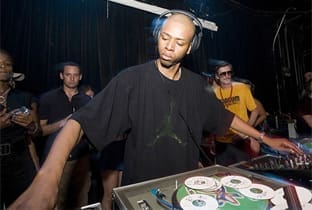
Charles Chambers, known professionally as DJ Funk, was born and raised in Chicago, a city synonymous with the birth and evolution of house music. Growing up on the South Side, he was immersed in a rich musical ecosystem shaped by DJs, block parties, and underground club culture.
Details about his family and formal education remain relatively private, yet his formative environment played a defining role in shaping his artistic identity. Chicago’s working-class neighborhoods, with their vibrant nightlife and grassroots creativity, provided the foundation for his musical journey.
Musical Beginnings: From House Roots to Ghetto House Innovation
DJ Funk began his career in the late 1980s, a period when house music was diversifying into multiple subgenres. Inspired by early pioneers such as:
- Frankie Knuckles
- Farley Jackmaster Funk
- Lil Louis
he initially embraced the foundational elements of house—four-on-the-floor beats, soulful samples, and club-oriented structures.
However, Funk quickly gravitated toward a more stripped-down and aggressive sound. Alongside contemporaries like DJ Deeon, he helped shape what would become known as ghetto house—a faster, more minimal, and more provocative evolution of Chicago house music.
Rise to Prominence: Dance Mania and Defining a Genre
DJ Funk’s breakthrough came through his prolific output on Dance Mania, the influential label that became the epicenter of ghetto house during the 1990s.
His releases were characterized by:
- Loop-based production
- High-energy drum programming
- Explicit, often humorous vocal samples
Tracks such as “Work That Body,” “Pump It,” and “Run” became staples in Chicago’s underground scene and beyond.
Unlike mainstream EDM artists, DJ Funk’s success was rooted in DJ culture—his records were tools for the dancefloor, designed to energize crowds rather than dominate radio charts.
Artistic Style: Minimalism, Repetition, and Provocative Energy
DJ Funk’s music is instantly recognizable for its raw, unpolished aesthetic. His style emphasizes:
- Rapid tempos (often exceeding 150 BPM)
- Repetitive vocal loops
- Minimal melodic content
- A focus on rhythm and physical movement
While some critics have viewed his explicit lyrical content as controversial, others interpret it as a reflection of the humor, bravado, and candid expression found within urban club culture.
For newcomers to EDM, his work may seem stark compared to polished festival anthems—but it is precisely this rawness that gives it enduring power.
Discography Overview
Selected Releases
| Year | Project/Track | Notes |
|---|---|---|
| 1995 | Pump It EP | Early defining release |
| 1996 | Work That Body | Club anthem |
| 1990s | Various Dance Mania singles | Core contributions to ghetto house |
| 2010s–2020s | Reissues and new material | Revival and global recognition |
DJ Funk’s discography is extensive, consisting largely of singles and EPs that collectively form a foundational body of work within ghetto house.
Awards and Recognition
| Category | Achievement |
|---|---|
| Genre Innovation | Pioneer of ghetto house music |
| Cultural Influence | Key contributor to Chicago house legacy |
| Global Reach | Inspired footwork, juke, and bass music scenes |
Although he has not been widely recognized by mainstream award institutions, DJ Funk’s influence is deeply embedded in the evolution of electronic music.
Collaborations and Industry Contributions
DJ Funk has collaborated with and influenced numerous artists across genres. His work laid the groundwork for the development of:
- Footwork and juke music
- Elements of techno and bass music
- DJ-centric production techniques
He has worked alongside key figures such as:
- DJ Deeon
- Traxman
Beyond collaborations, his productions have been sampled and referenced by artists across the global electronic music spectrum.
Challenges and Controversies
DJ Funk’s career has been shaped by both creative innovation and controversy. His explicit lyrical themes:
- Limited mainstream radio exposure
- Sparked debates حول censorship and artistic boundaries
- Positioned him as a polarizing figure within and beyond the dance community
Additionally, like many pioneers of underground music, he faced challenges related to industry recognition and financial sustainability.
Despite these obstacles, he remained committed to his artistic vision, refusing to dilute his sound for broader commercial appeal.
Personal Life and Cultural Identity
DJ Funk has maintained a relatively private personal life, allowing his music to serve as his primary mode of expression. His work reflects:
- The cultural dynamics of Chicago’s South Side
- A celebration of dancefloor energy and community
- A commitment to authenticity and independence
His artistic identity is deeply intertwined with the environment that shaped him, making his music both personal and communal.
Recent Work and Continuing Influence (2020–2026)
In recent years, DJ Funk has experienced a renewed wave of recognition as global audiences rediscover the roots of electronic music. His tracks continue to be:
- Played by contemporary DJs
- Reissued by labels seeking to preserve dance music history
- Celebrated in documentaries and retrospectives
He remains an active figure in the scene, performing and contributing to the ongoing evolution of Chicago’s musical legacy.
Legacy: The Blueprint of Ghetto House
The legacy of DJ Funk is foundational. His contributions include:
- Defining the sonic identity of ghetto house
- Influencing the development of footwork and juke
- Shaping the aesthetics of DJ-driven electronic music
Today, his influence can be heard in genres ranging from underground techno to contemporary bass music.
DJ Funk’s career stands as a testament to the power of authenticity in music. In an industry often driven by trends and commercial pressures, he has remained steadfast in his commitment to raw, uncompromising expression.


