

The Founding Architect of Funk Carioca
Early Life and Background
Birth and Identity
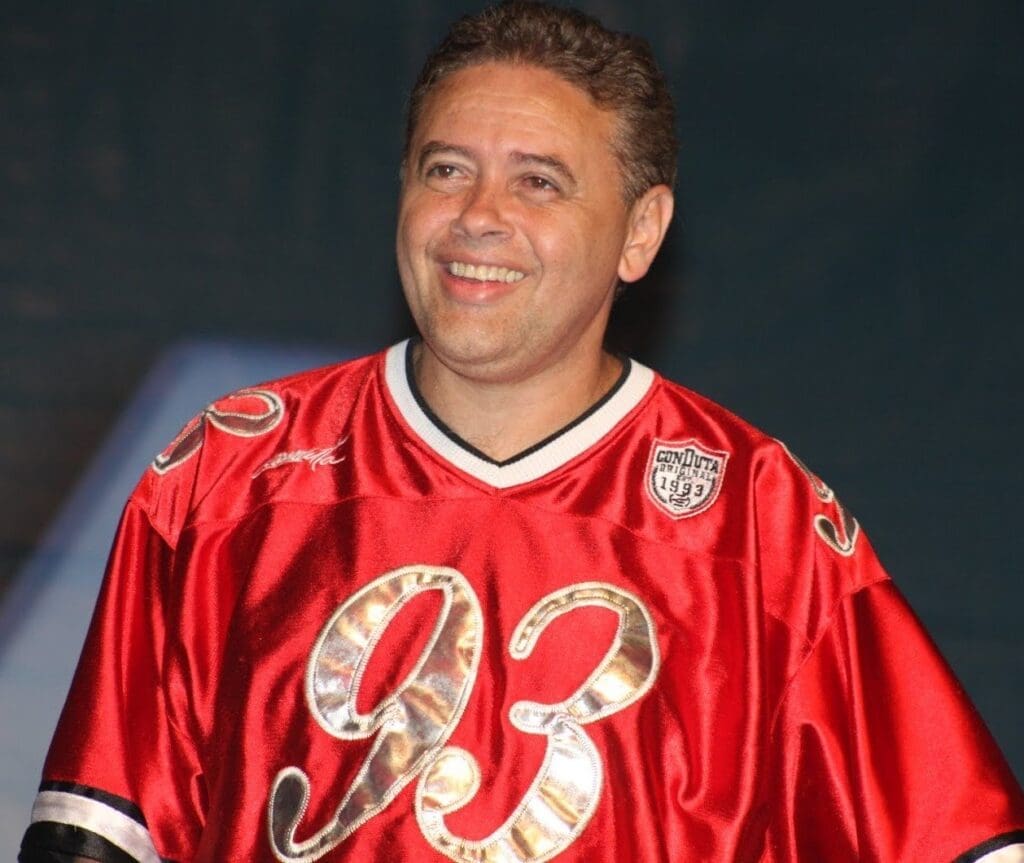
DJ Marlboro was born Fernando Luís Mattos da Matta on 19 September 1963 in Rio de Janeiro. Growing up in a city marked by stark social contrasts, he was exposed early to a mix of cultural influences—from American funk and soul to Brazilian popular music.
Family and Upbringing
While detailed records of his family life remain relatively private, Marlboro’s upbringing in Rio placed him at the crossroads of emerging urban youth culture.
The city’s vibrant street parties, community gatherings, and burgeoning DJ scene would become his informal education.
Education and Musical Beginnings
Unlike many contemporary producers, DJ Marlboro’s formative years predated the digital revolution. His musical education was hands-on and analog:
- Experimenting with vinyl records
- Learning DJ techniques through live performance
- Absorbing the energy of block parties and radio culture
He began his career as a radio DJ, where he gained early exposure and developed a keen sense of audience engagement—skills that would later prove crucial in shaping funk carioca.
The Birth of Funk Carioca
From Miami Bass to Brazilian Identity
In the 1980s, Marlboro became fascinated with Miami bass, a subgenre of hip-hop known for its booming low-end and party-oriented rhythms. Rather than simply replicate it, he reinterpreted it through a Brazilian lens.
This fusion gave rise to funk carioca, characterized by:
- Heavy, looped drum machine patterns
- Portuguese-language vocals
- Call-and-response chants
- Themes reflecting life in Rio’s favelas
Key Milestone: Funk Brasil Series
His Funk Brasil compilation series in the late 1980s and early 1990s became foundational texts of the genre. These releases:
- Introduced emerging MCs
- Defined the sonic blueprint of funk carioca
- Brought favela culture into mainstream Brazilian awareness
Career Trajectory and Expansion
Radio and Cultural Influence
DJ Marlboro’s role as a radio broadcaster amplified his impact. Through his programs, he:
- Promoted new artists
- Popularized funk carioca across Rio and beyond
- Created a platform for voices from marginalized communities
Live Performances and Baile Culture
He became synonymous with baile funk—massive dance parties held in favelas. These events were not just musical gatherings but social phenomena, shaping youth culture and community identity.
Musical Style and Influences
Signature Sound
DJ Marlboro’s productions are defined by:
- Raw, percussive beats
- Minimal melodic structure
- Emphasis on rhythm and vocal energy
His approach prioritizes immediacy and physical response, aligning closely with the communal nature of dance.
Influences
- American funk and hip-hop
- Miami bass
- Brazilian samba and popular music traditions
This blend created a uniquely Brazilian electronic genre with global resonance.
Discography and Key Works
Selected Releases
| Year | Title |
|---|---|
| 1989 | Funk Brasil Vol. 1 |
| 1990s | Funk Brasil series |
| Various | Singles and collaborations |
Notable Contributions
While not always credited as a traditional album artist, Marlboro’s influence lies in:
- Producing and curating compilations
- Launching the careers of numerous MCs
- Shaping the sonic identity of an entire genre
Collaborations and Industry Contributions
DJ Marlboro has worked with countless artists within Brazil’s funk scene, serving as:
- A producer
- A mentor
- A cultural gatekeeper
His collaborations span:
- Emerging favela MCs
- Established Brazilian performers
- International artists exploring funk influences
Awards and Recognition
| Year | Award | Category |
|---|---|---|
| Various | Brazilian Music Honors | Cultural Contribution |
| Multiple | Industry Recognition | Pioneer of Funk Carioca |
Though formal awards have been sporadic, his status as a founding figure is widely acknowledged.
Controversies and Challenges
Censorship and Moral Panic
Funk carioca has long been subject to controversy, often criticized for:
- Explicit lyrics
- Associations with favela life and crime
- Challenges to social norms
As a leading figure, DJ Marlboro faced:
- Media scrutiny
- Attempts at censorship
- Public debates over the legitimacy of funk as art
Cultural Tensions
His role in bringing funk to mainstream audiences also sparked debates حول:
- Commercialization vs. authenticity
- Representation of favela communities
Personal Life and Public Identity
DJ Marlboro has maintained a relatively private personal life, yet his public identity is deeply intertwined with his cultural mission.
Philosophy and Perspective
He has consistently emphasized:
- Music as a tool for social expression
- The importance of giving voice to marginalized communities
- The legitimacy of funk carioca as a cultural form
His interviews often reflect a commitment to bridging social divides through music.
Recent Activities and Continuing Influence
Even decades into his career, DJ Marlboro remains active:
- Performing at events and festivals
- Participating in documentaries and cultural discussions
- Supporting new generations of funk artists
His influence can be heard in global genres, from EDM to pop and hip-hop, where elements of funk carioca have been widely adopted.
Legacy: The Father of Funk Carioca
Cultural Impact
DJ Marlboro’s contributions extend far beyond music:
- Creation of a Genre: Establishing funk carioca as a distinct musical form
- Social Influence: Amplifying voices from marginalized communities
- Global Reach: Introducing Brazilian favela culture to international audiences
Industry Influence
His work has shaped:
- The structure of modern dance music
- The role of DJs as cultural curators
- The global perception of Latin American electronic music
Conclusion: Rhythm, Resistance, and Reinvention
For global readers new to electronic dance music, DJ Marlboro’s story offers a powerful reminder: some of the most transformative sounds emerge not from studios of privilege, but from communities of resilience.


