

The Visionary Who Gave Acid House Its Voice
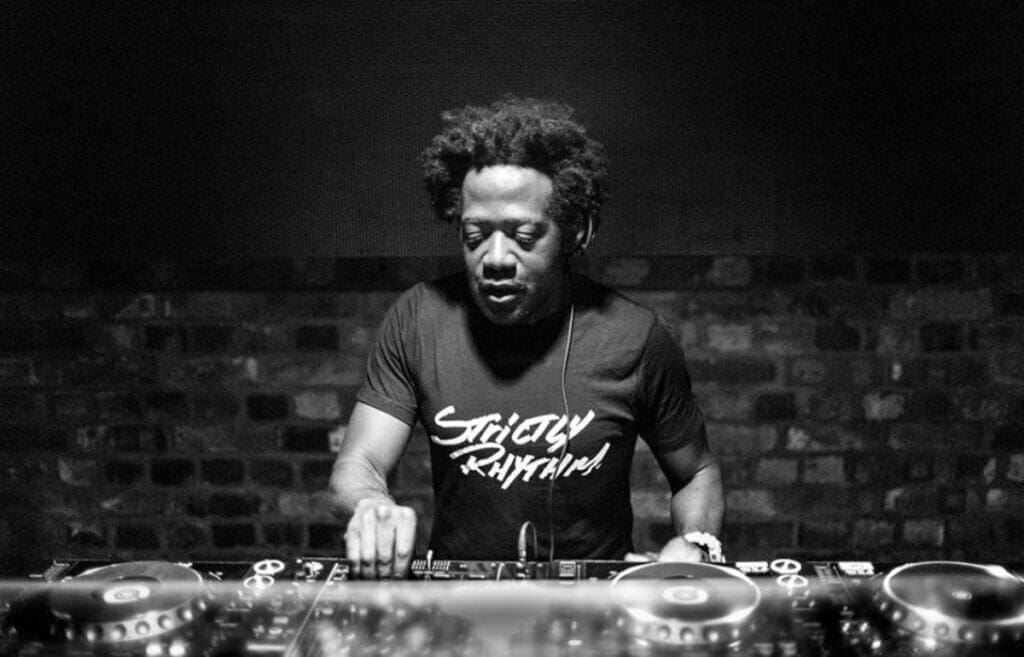
Early Life and Origins in Chicago
DJ Pierre, born Nathaniel Pierre Jones on July 12, 1965, in Chicago, stands as one of the most transformative figures in electronic dance music. Emerging from a city widely recognized as the birthplace of house music, Pierre’s life and career are inseparable from the cultural and sonic revolution that reshaped global dance floors in the late 20th century.
Raised in Chicago’s South Side, Pierre grew up in a musically vibrant yet economically challenged environment. His family life, though largely private in public accounts, was grounded in the everyday realities of urban America during the 1970s and 1980s. Music, however, offered both escape and identity. As a young listener, Pierre was drawn to funk, disco, and early electronic sounds circulating through radio and local parties.
Unlike classically trained musicians, Pierre’s education in music was experiential. He attended local schools in Chicago but found his true calling outside the classroom—learning DJ techniques, experimenting with equipment, and immersing himself in the city’s burgeoning club culture.
The Birth of Phuture and the Acid House Revolution
Pierre’s entry into music history is inseparable from the formation of the group Phuture, alongside collaborators Spanky and Herb J. Together, they embarked on a journey that would inadvertently create an entirely new subgenre: acid house.
In 1987, Phuture recorded the now-legendary track “Acid Tracks”, using the Roland TB-303—a machine originally designed to emulate bass guitars but largely dismissed by musicians at the time. Pierre, however, recognized its untapped potential.
Through experimentation—twisting knobs, manipulating frequencies, and embracing the machine’s quirks—he produced a sound unlike anything heard before: squelching, hypnotic, and otherworldly.
When “Acid Tracks” debuted at Chicago’s underground parties, it captivated audiences and quickly spread internationally, becoming a cornerstone of rave culture in the UK and beyond.
Musical Style and Artistic Philosophy
DJ Pierre’s artistry is rooted in innovation through experimentation. His work embodies a philosophy that prioritizes exploration over convention. Rather than adhering to established musical structures, Pierre has consistently pushed the boundaries of sound design.
His signature style includes:
- Fluid, modulated basslines derived from the TB-303
- Repetitive yet evolving rhythmic patterns
- A balance between raw energy and hypnotic subtlety
- A deep connection to dance floor psychology
Pierre has often emphasized that the creation of acid house was not a calculated move but a discovery—an accident that became a revolution. In interviews, he has reflected on the importance of curiosity, once noting that the most groundbreaking ideas often emerge from “not knowing the rules.”
Career Expansion and Reinvention
Following the success of Phuture, DJ Pierre embarked on a prolific solo career, adopting various aliases and exploring multiple facets of house music. Throughout the late 1980s and 1990s, he became a central figure in the global expansion of electronic dance music.
He released music under several monikers, including:
- Phuture
- Phortune
- DJ Pierre (solo projects)
His work extended beyond acid house into deep house, techno, and experimental electronic music, demonstrating remarkable versatility.
Pierre also became a respected DJ, performing internationally and helping to spread Chicago house music across Europe, Asia, and beyond.
Collaborations and Industry Contributions
DJ Pierre’s influence extends well beyond his own productions. He has collaborated with numerous artists and contributed to shaping the broader house music ecosystem.
Notable collaborations and associations include:
- Work with fellow Chicago pioneers such as Marshall Jefferson
- Influence on artists like Carl Cox and Fatboy Slim
- Contributions to remix culture, reinterpreting tracks across genres
Pierre has also played a mentoring role, supporting emerging producers and advocating for the preservation of house music’s roots.
Challenges, Recognition, and Cultural Impact
Despite his foundational role in acid house, DJ Pierre—like many pioneers—faced challenges in receiving mainstream recognition during the early years of his career. The underground nature of house music, coupled with issues of credit and commercialization, often obscured the contributions of its originators.
Additionally, the rise of rave culture in Europe brought both acclaim and controversy, as acid house became associated with countercultural movements and, at times, legal scrutiny.
Over time, however, Pierre’s contributions have been widely acknowledged. He is now regarded as a founding architect of acid house, a genre that reshaped global youth culture and music production.
Personal Life and Cultural Identity
DJ Pierre has maintained a relatively private personal life, focusing public attention on his music and cultural advocacy. His identity as a Chicago native remains central to his narrative, and he has consistently championed the city’s role in shaping electronic music.
Spiritually and philosophically, Pierre’s work reflects a belief in creative freedom and communal experience. His music often evokes a sense of unity, aligning with the inclusive ethos of early house culture.
Recent Work and Continued Relevance (2020s–2026)
In recent years, DJ Pierre has experienced a resurgence of interest, particularly as younger generations rediscover acid house. He has continued to release music, perform globally, and participate in documentaries and retrospectives on electronic music history.
His later projects often revisit acid house while incorporating modern production techniques, demonstrating both reverence for tradition and openness to evolution.
Pierre remains an active voice in discussions about the history and future of house music, advocating for recognition of its origins and pioneers.
Legacy: The Sound That Changed Everything
DJ Pierre’s legacy is monumental. By transforming a neglected synthesizer into a revolutionary instrument, he helped create a genre that would influence decades of music—from techno and trance to modern EDM.
His contributions include:
- Inventing acid house, a defining subgenre of electronic music
- Shaping global rave culture
- Inspiring generations of producers and DJs
- Preserving the spirit of Chicago house music
For newcomers to EDM, DJ Pierre’s story offers a powerful reminder: innovation often begins with curiosity, experimentation, and a willingness to break the rules.
Selected Discography
| Year | Title | Project |
|---|---|---|
| 1987 | Acid Tracks | Phuture |
| 1988 | Your Only Friend | Phuture |
| 1990s | Various releases | DJ Pierre |
| 2010s–2020s | Multiple EPs & collaborations | DJ Pierre |
Awards and Recognition
| Category | Recognition |
|---|---|
| Pioneer Status | Widely credited as a creator of acid house |
| Cultural Impact | Influenced global rave and electronic music scenes |
| Industry Respect | Celebrated by DJs, producers, and historians worldwide |
DJ Pierre did not merely contribute to electronic dance music—he transformed it. His discovery of acid sound was not just a technical breakthrough but a cultural moment that reshaped how music is created, experienced, and understood.


