

The Detroit Visionary Who Redefined Techno for Generations
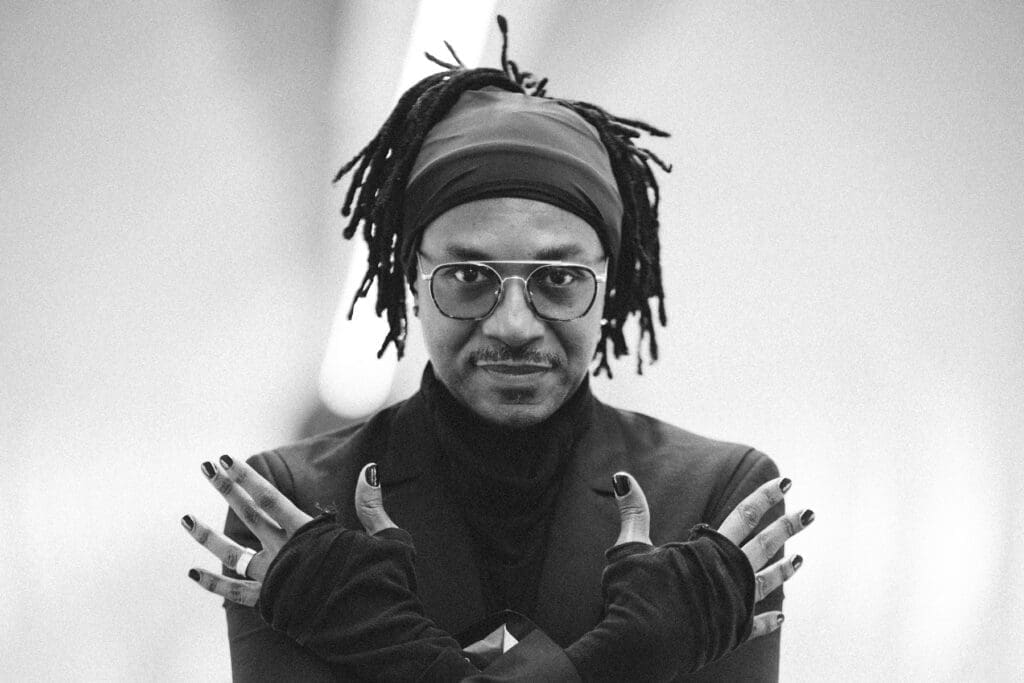
Early Life and Musical Roots
Full Birth Name: Stacey Pullen
Date of Birth: 1969
Place of Birth: Detroit, Michigan, United States
Growing up in Detroit, Pullen was immersed in a sonic environment steeped in musical innovation. Detroit’s legacy as the birthplace of techno—and earlier as the heartland of Motown—meant music was more than entertainment; it was culture, identity, and community.
Pullen’s father was a performing musician, exposing him to live performance and musicianship from an early age, and fostering a deep connection to rhythm and groove that would later underpin his entire career.
He began playing instruments such as flute and percussion in school bands as early as age nine, gaining practical musical skills and performance experience. Touring with school bands around the United States as a teenager, he developed a natural affinity for stage presence and an understanding of musical structure that would later influence his techno compositions.
Education and Early Influences
Though Pullen did briefly attend university in Tennessee, his true education came from his immersion in Detroit’s underground music scene. In the mid‑1980s, when techno was still in its infancy, Pullen began frequenting clubs like The Primadonna and The Music Institute—venues that exposed him to emergent electronic sounds and DJ culture.
It was at The Music Institute where he forged connections with Detroit pioneers such as Alton Miller and Chez Damier, and, crucially, with Derrick May, one of techno’s most influential figures. May became a mentor for Pullen, pushing him to refine his production skills and deepen his technical understanding.
Pullen credits this early period of mentorship and technical apprenticeship with shaping his creative philosophy: music should be expressive, exploratory, and rooted in rhythmic integrity rather than spectacle.
The Musical Journey: From Bango to Techno Innovator
Early Forays and First Releases
Stacey Pullen’s earliest work emerged under several monikers, including Bango, Silent Phase, Kosmic Messenger, and X‑Stacy. His first significant track, produced in 1992, was born out of remix work under the guidance of Kevin Saunderson—another member of Detroit’s influential techno triumvirate. When a remix he did using sampled elements of The Prodigy wasn’t approved for release, Pullen reworked it into an original composition, which became his first release on a subsidiary of KMS Records.
This release led to further collaboration with May and the Transmat/Metroplex/KMS collective, solidifying Pullen’s place among Detroit’s techno innovators. His work during this era was distinctive—a blend of Detroit’s raw rhythmic energy with melodic and structural experimentation drawn from house, garage, and broken beat influences.
International Breakthrough and Touring
In 1993, Derrick May invited Pullen to perform in Europe. What was meant to be a month‑long stint in Amsterdam extended to a full year of touring, where Pullen honed his DJ skills and developed an international reputation. He played at major European clubs, including London’s Ministry of Sound and Paris’s Rex Club, and interacted with leading artists and labels such as R&S Records, further expanding his sonic perspective.
This period was pivotal. Not only did it expose international audiences to Detroit techno’s second wave, but it also allowed Pullen to refine his identity as an artist who could straddle production, performance, and cross‑cultural exchange.
Artistic Style and Musical Influences
Stacey Pullen’s music is uniquely expressive, melding the mechanical precision of techno with the groove and soul of house and garage. He cites Detroit legends like Derrick May, Juan Atkins, and Kevin Saunderson—the Belleville Three—as foundational influences, but his style also incorporates broken beat, jazz inflections, and world music textures, especially in his later works.
While rooted in techno’s rhythmic foundations, Pullen’s productions often explore melodic motifs, improvisational structure, and deeper emotional resonance. This broad palette has enabled his music to transcend strict genre boundaries while remaining unmistakably grounded in Detroit tradition.
Discography and Key Works
Pullen’s recording career spans more than three decades, with releases that have influenced countless producers and DJs.
| Year | Title | Format |
|---|---|---|
| 1992 | Bango – Bango EP | 12″ EP |
| 1995 | Silent Phase – (The Theory Of) | Album |
| 1996 | DJ‑Kicks: Stacey Pullen | Mix Album |
| 1997 | Kosmic Messenger – The Collected Works of Kosmic Messenger | Album |
| 2001 | Today Is the Tomorrow You Were Promised Yesterday | Studio Album |
| 2004 | Fabric 14 | Mix Album |
| 2015 | Balance 028: Stacey Pullen | Mix Album |
| 2021 | Feel It / Circus Act | Single Package |
From his early experimental techno to acclaimed mix compilations for Studio !K7, Fabric, and Balance, Pullen’s catalogue is both expansive and influential across techno’s global diaspora.
Collaborations and Production Contributions
Pullen’s production credits extend beyond his own releases. Early remix work with Kevin Saunderson for artists like Karen White helped establish his studio credentials, and his collaborations with Chez Damier and others during the 1990s positioned him as a bridge between techno, house, and emerging underground electronic styles.
His label, Blackflag Recordings, launched in 1998, has also served as a crucial platform for both his own releases and those of like‑minded producers, fostering innovation while preserving techno’s forward‑thinking ethos.
Performance Career and Live Presence
Renowned equally for his DJing and production, Pullen’s live performances are celebrated for their depth, individuality, and unpredictability. Rather than relying on set formulas, he curates long, adventurous journeys through sound—often spanning styles and eras within techno and across electronic music at large.
From Detroit’s clubs to global festivals and legendary venues like Fabric in London, his sets are rhythmic explorations that reflect his encyclopedic knowledge of dance music history and his ongoing commitment to surprise and engage audiences.
Challenges and Controversies
While Pullen’s career has been largely defined by creativity and innovation, it has not been without its share of challenges. Issues with licensing for his own label and sporadic hiatuses from recording underscore the complex realities faced by artists who prioritize artistic integrity over commercial expediency.
In interviews, Pullen has spoken candidly about navigating changing industry landscapes without losing sight of his artistic vision, emphasizing patience, resilience, and the importance of creative depth over fleeting trends.
Personal Life and Public Persona
Despite his global reputation, Stacey Pullen maintains a grounded and humble public image. He continues to reside in Detroit, a city whose cultural and musical legacy he has both inherited and helped transform. In interviews, he reflects on his craft with clarity and introspection, viewing his life’s work not in terms of fame but as a continuing conversation with audiences and fellow artists about what dance music can be.
His personal experiences—growing up around performance, traveling extensively, and witnessing the evolution of electronic culture—infuse his music with a rich, lived authenticity that resonates deeply across generations.
Awards and Recognition
Though electronic music traditions such as techno often prioritize influence and legacy over conventional industry awards, Pullen’s contributions have earned profound respect from critics, peers, and global audiences alike.
| Category | Recognition |
|---|---|
| Techno Innovation | Pioneering voice of Detroit’s second wave |
| Mix Series Contributions | DJ‑Kicks, Fabric, Balance mixes |
| Label Impact | Founder of Blackflag Recordings |
His role as both producer and DJ has been acknowledged through sustained support from international promoters, leading labels, and influential DJs.
Legacy and Cultural Impact
Stacey Pullen’s impact on techno and broader electronic culture is immeasurable. As an innovator who distilled Detroit’s spirit into melodies, rhythms, and DJ sets that moved audiences worldwide, he helped define what techno could be—deeply personal, rhythmically compelling, and open to evolution.
His career exemplifies the ethos of techno not merely as music but as creative philosophy: a space where experimentation, emotional expression, and rhythmic exploration coexist. Pullen’s influence can be heard in the work of numerous contemporary producers and DJs, and his commitment to artistry continues to inspire new generations entering the world of electronic music.
In tracing Stacey Pullen’s journey—from Detroit club nights to global stages, from early experimental tracks to seminal mixes and label leadership—we encounter more than a biography. We encounter a story of dedication, curiosity, and sonic courage. For readers new to EDM, Pullen’s life exemplifies how techno can be both deeply rooted and endlessly expansive.


